Sylvia
TURNING THE TIDE: How Pheha Plastic Is Tackling Lesotho’s Waste Management Crisis
TURNING THE TIDE: How Pheha Plastic Is Tackling Lesotho’s Waste Management Crisis
Writes Letsatsi Selikoe
Lesotho faces significant waste management challenges that reflect broader developmental and environmental concerns across the country. As urbanization accelerates and consumption patterns evolve, Lesotho’s waste situation has become increasingly critical, requiring comprehensive policy interventions and infrastructure development. Yet amid these challenges, innovative local solutions are emerging.
According to a 2021 Rapid Assessment undertaken by the United Nations Development Programme (UNDP) Lesotho, 69 percent of all waste that finds its way into streams, rivers and eventually the ocean is plastic. In Maseru alone, around 105,000 tonnes of waste is generated per year. Nationally, of 137,510 tonnes generated yearly in Lesotho, only 20 percent falls within the collection system, 80 percent is unaccounted for, much of it ending up in the environment.
Lesotho’s current waste management infrastructure is inadequate to meet growing demands. Most waste is disposed in open dumps such as the Ts’osane dumping site that has created more challenges than solutions. Lesotho does not currently have properly engineered landfills, with Ts’oeneng landfill site being one of the only relatively organized disposal facilities still yet to be commissioned.
Open dumps pose serious environmental and health risks, including groundwater contamination, air pollution from uncontrolled burning, and disease transmission through vermin and insects. Plastic waste, which can persist in the environment for hundreds of years, accumulates in these dumps and across the landscape, creating visual pollution and environmental hazards. Residents of Ha-Ts’osane have raised concerns about these issues for years with no resolution in sight from the Maseru City Council.
Policy Framework
Lesotho’s waste management policy framework has evolved gradually over the past two decades, though implementation remains a significant challenge. The primary legislation governing waste management includes the Environment Act of 2008, which provides the overarching legal framework for environmental protection, including waste management provisions.
The National Environment Policy addresses waste management as part of broader environmental objectives, emphasising the need for sustainable waste management practices, pollution prevention, and the protection of public health. However, the policy lacks specific, measurable targets, and enforcement mechanisms have proven weak.
Amid these challenges, innovative local solutions are emerging. Pheha Plastic, a pioneering social enterprise, has positioned itself at the forefront of addressing Lesotho’s plastic waste crisis, demonstrating that community-driven initiatives can fill critical gaps where government capacity falls short.
Products, People, and Impact: Pheha Plastic
Pheha Plastic operates as more than just a recycling facility. It is a not-for-profit plastic recycling company and environmental awareness centre, with a mission to become the destination for waste plastic and also contribute to a green Lesotho. Pheha Plastic are ambassadors of a clean Lesotho who are educating and equipping communities with the necessary information and tools to become part of a culture that seeks to address climate change in their everyday lives.
According to the Founder Ms Limpho Thoahlane, the journey to becoming one of Lesotho’s most prominent environmental activists didn’t follow a conventional path. She has no degree in environmental science or engineering. What she has is something arguably more valuable in the digital age: determination, internet access and a willingness to learn.
Her path to founding Pheha Plastic in 2019 began with personal transformation. Seeking a fresh start and a sanctuary for healing, Limpho relocated to Morija, where she found comfort and support from relatives and a sense of community at the Morija Arts Centre and The Hub. The Hub, a vital non-governmental organisation that plays a transformative role in young people’s lives, became the crucible for Limpho’s environmental awakening.
It was at The Hub where she began exploring photography and film while immersing herself in climate change issues. Over three years of volunteering at the Hub at Morija and Morija Arts Centre, she had owned the conversation about climate activism and has influenced those around her to engage in action-based dialogue.
But the catalyst for Pheha Plastic’s creation came from an unexpected source: Social media. Ms Thoahlane had decided to use her Twitter account to actively talk about plastic pollution and climate activism. Then something remarkable happened. A company named Hirundo Energy from Belgium approached her on Twitter. They said they were amazed at the work that she was doing in Morija. Hirundo Energy went on to acquire funding from the Flemish government to buy machines, that would enable her to start a plastic recycling company.
This partnership transformed Ms Thoahlane’s vision into reality. With machinery funded by the Flemish government and technical knowledge gained from countless hours of YouTube tutorials, Pheha Plastic was born in 2021.
What Pheha Plastic Does
Pheha Plastic’s work encompasses several interconnected activities, each contributing to its overall mission of addressing plastic waste while creating social and economic value.
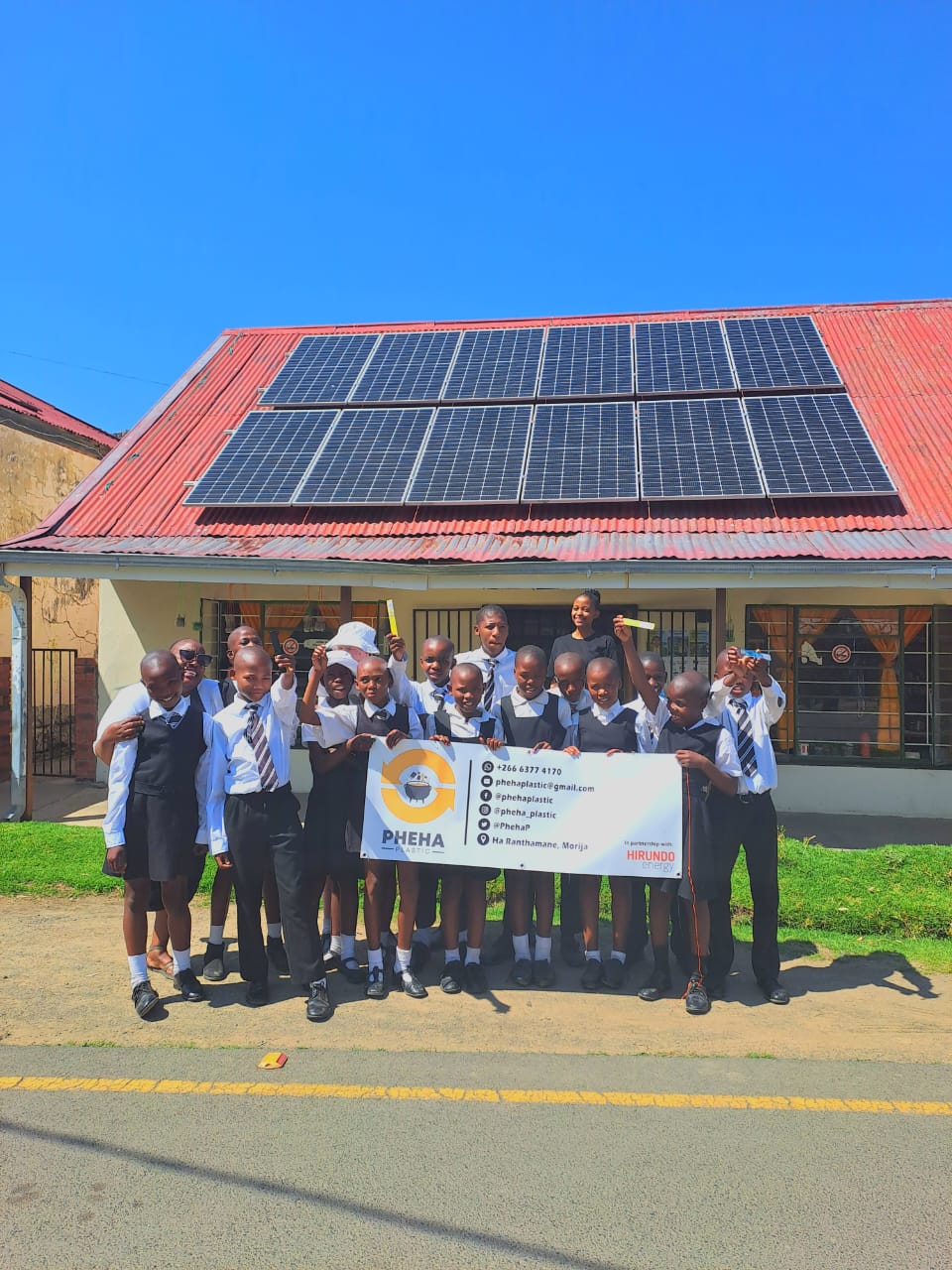
Collection: The organisation has established a network of collection points and partnerships with schools, businesses, and community organisations. Through these channels, Pheha Plastic collects various items of plastic waste, with particular focus on Polypropylene (PP). The collection system includes both drop-off points where individuals can bring waste and organised collection drives in communities and institutions.
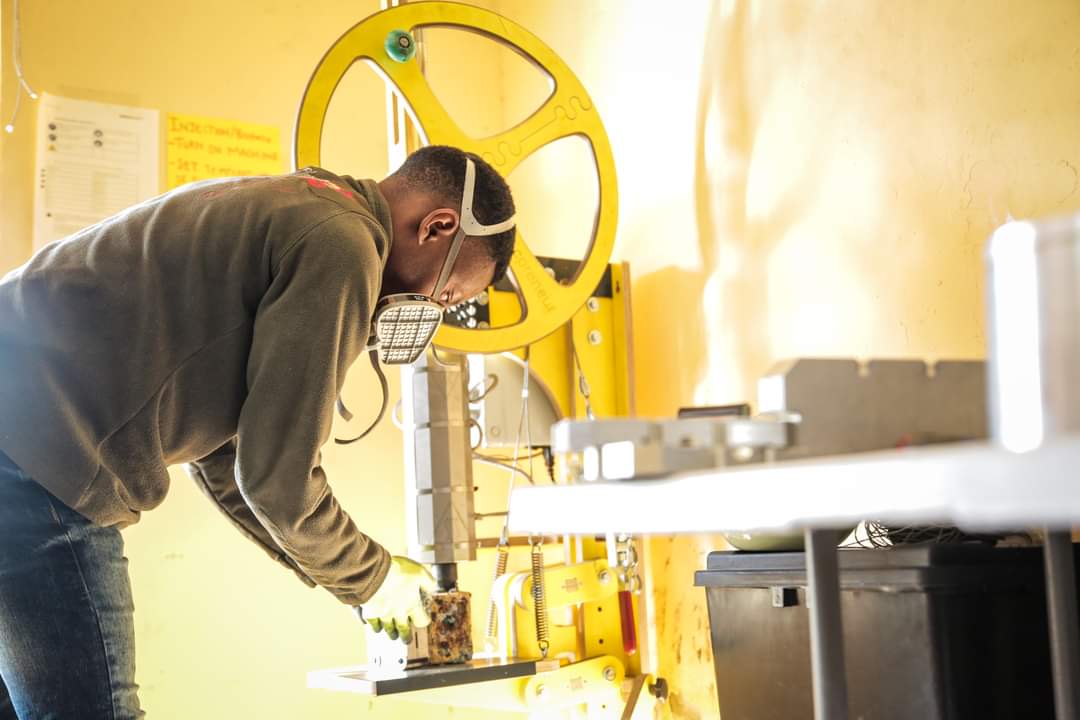
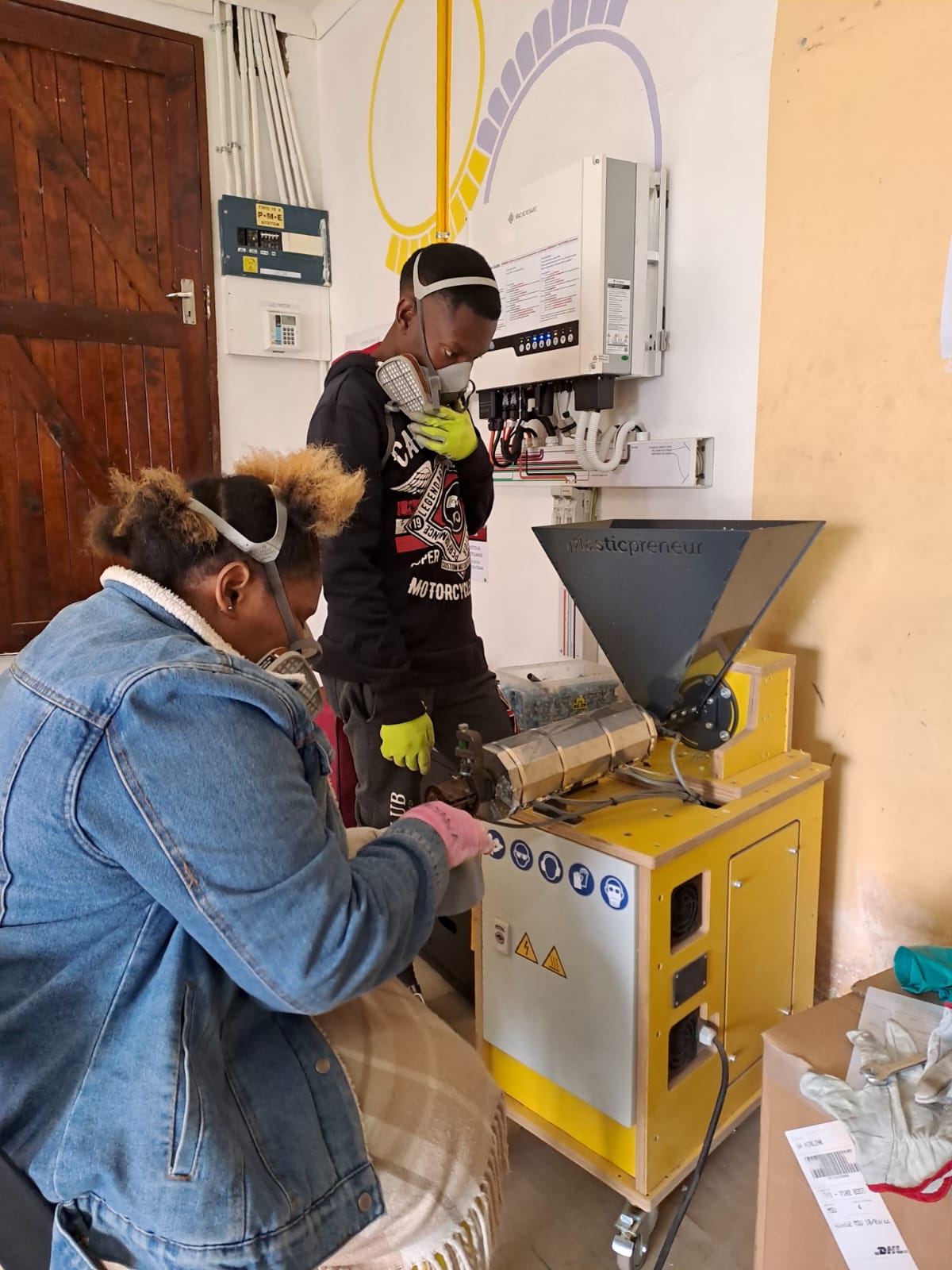
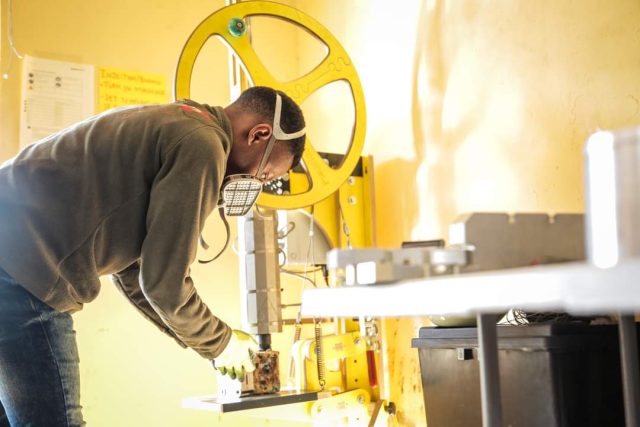
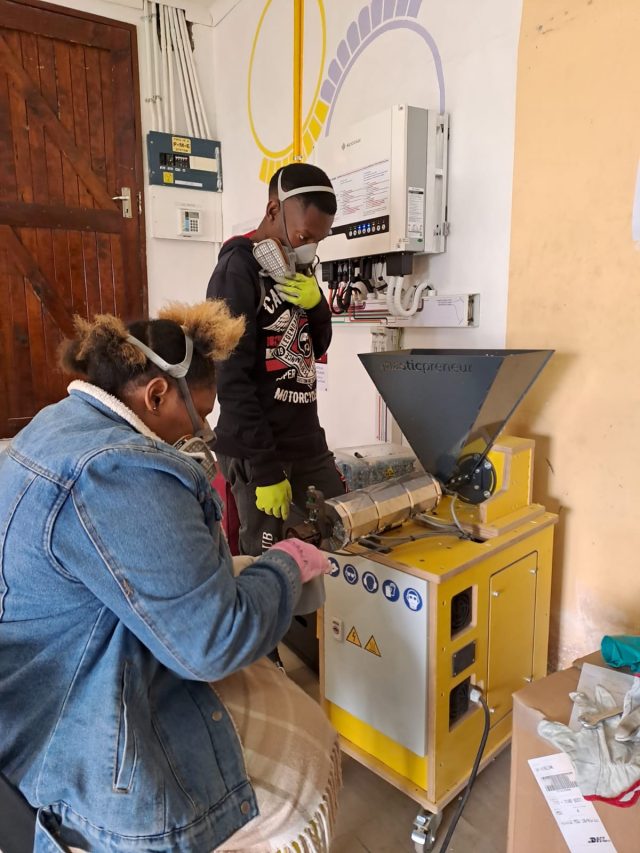
Sorting and Processing: Once collected, plastic waste undergoes careful sorting, Sorted plastics are then cleaned to remove contaminants, shredded into smaller pieces, and prepared for transformation into new products. This processing work employs Basotho youth, who face particular challenges in Lesotho’s limited job market. There are three employees currently employed by Pheha Plastic.
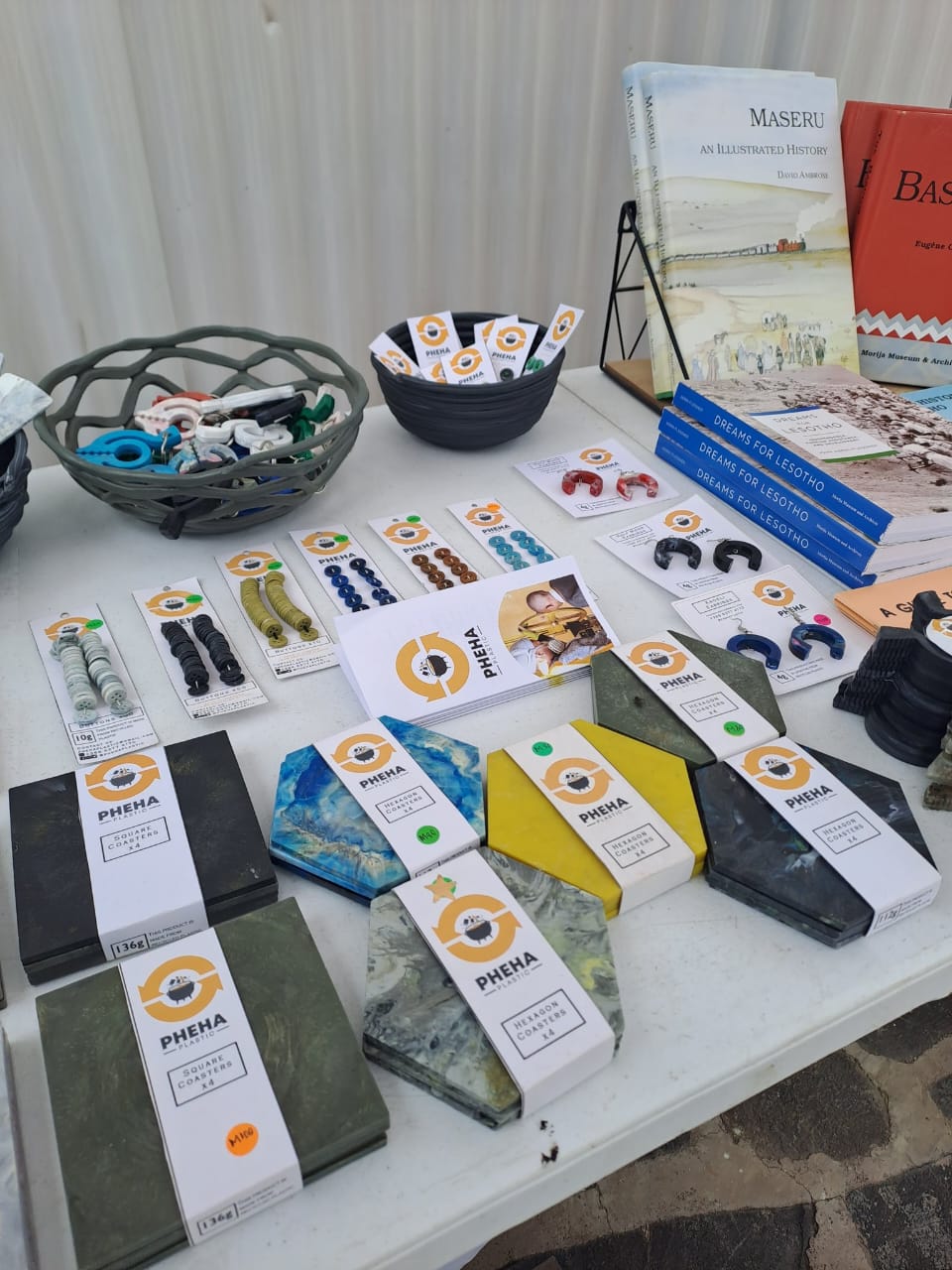
Product Manufacturing:Pheha Plastic transforms collected plastic waste into a range of useful products with the help of machines. These include plastic tiles, rulers, earrings and other household objects. Other products include bins, containers, and custom items developed in response to market demand.
Impact and AchievementsSince its inception, Pheha Plastic has demonstrated measurable impact across environmental, social, and economic dimensions. The organisation has collected and processed thousands of kilograms of plastic waste that would otherwise have ended up in dumps, waterways or burned in open fires. Each kilogram of plastic diverted represents pollution prevented and environmental damage avoided.
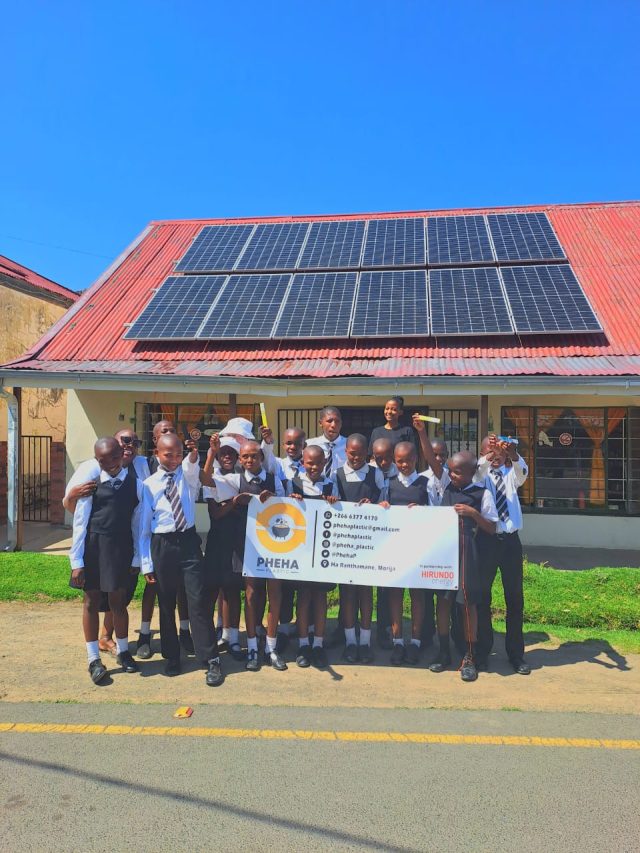
Pheha Plastic has also made significant contributions to educational initiatives that have reached thousands of students and community members, raising awareness about plastic pollution and promoting sustainable practices. Their educational sessions are based on using the five Rs—Refuse, Reduce, Reuse, Re-purpose, Recycle—alongside teaching about the circular economy, advocacy, and environmentalism. These awareness campaigns complement the organisation’s practical work, creating demand for recycling services and reducing plastic consumption and littering behaviours.
The employment and income generation aspects of their work address Lesotho’s acute unemployment challenge. Pheha Plastic contributes to poverty alleviation and economic empowerment. The skills and experience gained by workers and waste collectors enhance their employability and entrepreneurial potential.
Perhaps most significantly, Pheha Plastic has demonstrated a proof of concept for social enterprise approaches to waste management in Lesotho. By showing that plastic waste can be converted into economic value while addressing environmental challenges, the organization has inspired others and influenced thinking among policymakers and development practitioners.
Despite its successes, Pheha Plastic operates within the same challenging environment that constrains Lesotho’s broader waste management efforts. Financial sustainability remains an ongoing challenge. While product sales generate revenue, the relatively small size of Lesotho’s market and low purchasing power of many potential customers limit revenue potential. The organisation requires continued donor support and partnerships to maintain and expand operations. (I wish the call here was the need to expand to other districts, not the desire to generate revenue from potential customers)
The infrastructure challenges extend beyond technical knowledge. Lesotho lacks comprehensive waste management infrastructure, making systematic collection difficult. The company relies on voluntary drop-offs and their own collection efforts at designated points, which is labor-intensive and limits scale.
There are also market challenges. While Pheha Plastic’s products are sold at retail outlets, building consistent demand for recycled plastic goods requires ongoing consumer education and marketing. The products must compete with cheaper imported alternatives while educating consumers about the environmental value they provide.
Government Response: The Plastic Levy and Beyond
Recognising the crisis of plastic waste and its risk to the environment, the Government of Lesotho has taken steps to address plastic pollution through regulatory measures. In 2024, Lesotho introduced the Plastic Levy because it was deemed to have the potential to change human behavioural patterns regarding the use and disposal of plastic. The levy also provides opportunities for the much-needed funds towards controlling and preventing pollution, providing awareness and financing enforcement activities against environmental crimes.
The regulations focus on plastic shopping bags with a minimum thickness of 25 to 35 microns, made from polyethylene, polypropylene, chloride, and nylon. The amount of levy per plastic bag between 25 and 35 microns is 90 lisente. Flimsy plastics or plastics with a thickness of less than 25 to 35 microns are totally prohibited. Plastic shopping bags used for primary packaging and plastic carrier bags that are used to separate goods for hygiene purposes are exempted from the regulations.
Violations carry serious consequences: a person who contravenes any provision of the Plastic Levy regulations commits a criminal offence and is liable to a fine not less than M5,000 or imprisonment for not less than two years, or both.
Beyond the levy, Lesotho has implemented several complementary initiatives. The country launched the plastic-free Wednesday initiative in 2021, courtesy of the United Nations Development Program (UNDP), in partnership with retail stores like Shoprite, Pick n’ Pay and PEP. The ‘Cleanest Town Competition’ was launched in 2022 to create a sense of local pride among rural communities aiming to live in cleaner, healthier environments. The government also dedicated the final Friday of each month to the cleaning campaign known as ‘Operation Hloekisa Lesotho’.
The Paradox: Why Plastic Restrictions Create Recycling Opportunities
Most people would assume that regulations discouraging plastic use would hurt a plastic recycling business, but Thoahlane looks at it differently. In fact, she boldly explains that she is hundred per cent in support of the regulations that ban the use of plastic.
She narrated that the shift toward reusable bags and reduced plastic consumption doesn’t eliminate the plastic problem, it just stops it from getting worse. Meanwhile, decades of plastic accumulation remain in the environment. Every stream in Morija, every roadside in Maseru, every illegal dump site across Lesotho contains plastic waste that will persist for centuries unless someone does something about it.
This is where Pheha Plastic’s opportunity lies. As new plastic consumption decreases, the focus shifts to cleaning up existing waste. And unlike new plastic manufacturing, which has faced increasing restrictions, plastic recycling aligns perfectly with government priorities and international sustainability goals.
Pheha Plastic has established a network of collection points across both Maseru and Morija.. In Maseru, they collect at the Alliance Francaise, Café What and Scenery Guest House, while in Morija they pick up waste at the Morija Museum and Archives, The HUB and Morija Arts Centre. They also have walk-ins coming through to deliver plastic waste.
The Question of Policy and Infrastructure
The tension between grassroots innovation and systemic change runs throughout Pheha Plastic’s story. While Ms Thoahlane’s initiative demonstrates what individuals can accomplish, her own statements acknowledge the limits of private action without government support.
The plastic levy regulations represent a step forward, but implementation and enforcement remain critical. Changing consumer behaviour requires not just laws but sustained public education and convenient alternatives. Building a circular economy requires infrastructure for collection, sorting, processing, and manufacturing that currently doesn’t exist at scale in Lesotho.
Pheha Plastic has outlined what comprehensive solutions would include, citing among others, proper waste management infrastructure, national policies on recycling, laws on littering with enforcement mechanisms, and public education integrated into the school curriculum. Adding that our education system also needs to prioritise climate activism.
Ultimately, addressing Lesotho’s waste crisis will require sustained commitment across government, civil society, the private sector, and communities. It will demand investment, innovation, behavioural change, and institutional strengthening. Organisations like Pheha Plastic cannot absolve the government of its responsibility for basic services and regulatory frameworks, but they can complement, catalyse, and demonstrate what is possible. In doing so, they offer hope that Lesotho can transition from a waste management crisis toward sustainable solutions that protect the environment, create opportunity, and build a cleaner, healthier future for all Basotho.