Sylvia
Frank Mooki Leepa: The Measure of a Musician
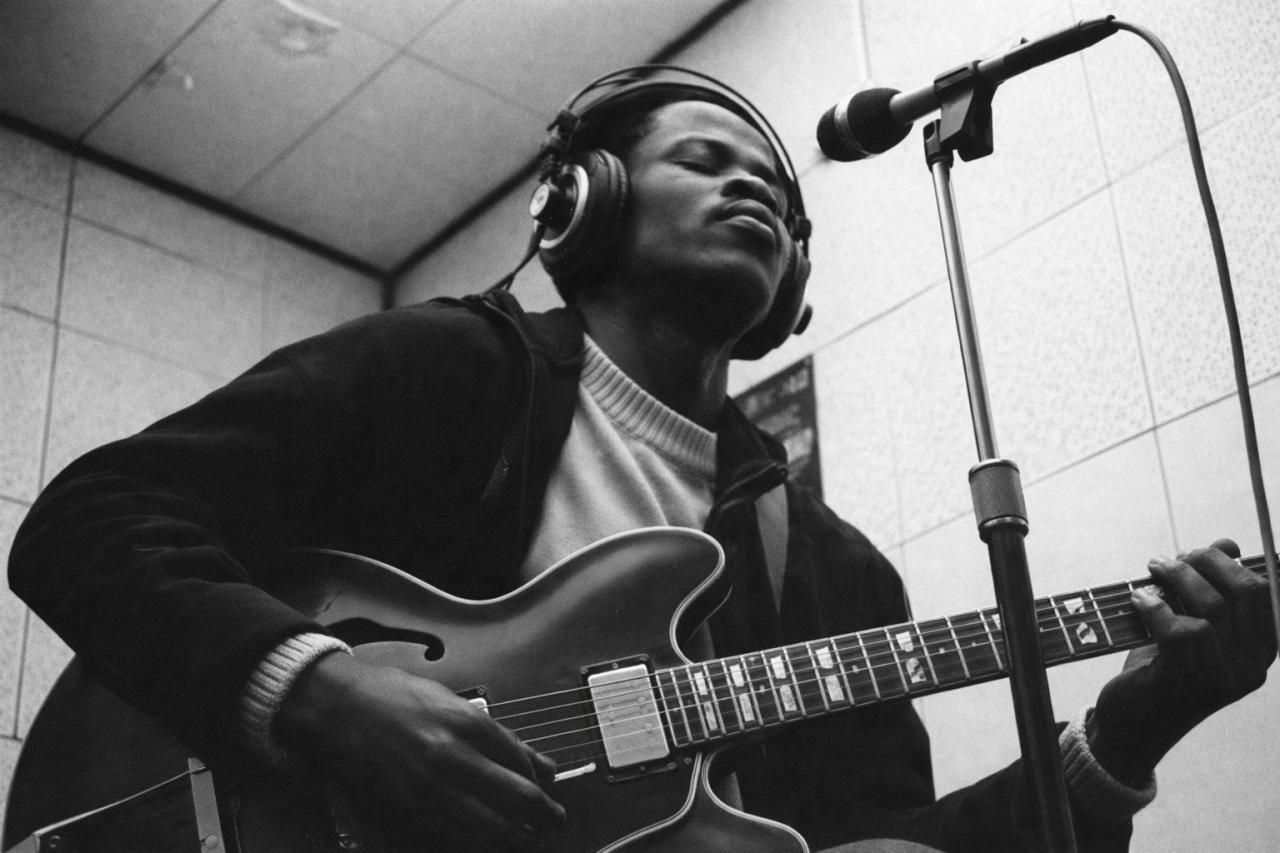
Frank Mooki Leepa: The Measure of a Musician
Writes Thato Chobokoane
There are musicians who become popular, and there are musicians who become foundational. Frank Mooki Leepa, fondly known in his circle as “Captain” belongs firmly to the latter category. His name sits quietly but securely in the architecture of Lesotho’s modern music, not because he sought acclaim, but because he worked with discipline, conviction, and direction at a time when such clarity was rare.
To understand Frank Leepa’s contribution is to listen carefully to those who were present; those who rehearsed in the rooms where the sound was being orchastrated, those who carried the records to radio, those who lived in the household where music never stopped, and those who inherited the standard he set.
Frank Mooki Leepa occupies a central place in the history of Lesotho’s music. His contribution was not accidental, nor was it incidental. Those who worked alongside him, promoted his work, and observed his growth are consistent in their assessment: he was foundational.
This remembrance draws on the reflections of Mr. Masitise Seleso, music promoter, writer, and activist; Mr. Mokoenya Chele, musician and radio personality; Ms. Mpho Leepa, his sister; and contemporary artist Selimo Thabane. Their words, taken together, form a portrait not of true substance and a recollection of a birth of modern day culture.
The Early Instinct to Compose
In the 1970s, bands across Maseru were mastering American soul and rhythm-and-blues covers. It was the dominant template. Ray Charles, The O’Jays, and Teddy Pendergrass provided the repertoire through which musicians proved their technical competence. Within that environment, Frank Leepa began writing his own songs.
His earliest compositions, Mathabo and Just the Opposite, were released as singles. They signalled something important: he was not content merely to interpret sounds from overseas, mimicking the words and emotions; he intended to author. Another early composition, Waiting in the Sun, Waiting for Tomorrow, signaled a quiet turning point. The borrowed sound was beginning to give way to something rooted.
Mr. Mokoenya Chele remembers that era clearly. Local music, he says, was largely “safe.” It did not provoke, did not confront, did not push beyond entertainment. Frank’s writing introduced a different current. “His music carried African consciousness,” Chele recalls. “It carried freedom.”
That shift did not occur in isolation. The region was politically charged. Apartheid shaped movement, conversation, and expression across Southern Africa. Music could not remain neutral forever; and Frank Leepa pioneered this shift here in Lesotho and it became obvious that music could not separate itself from regional politics. Frank did not write with safety in mind, but as a man who was unencumbered to deliver the change needed in the nation at the time. Chele is right, he represented freedom, but more so, it was a truthful interpretation of the times in which they lived. This makes it a joy to listen to their music to transport oneself in history, and experience life as it was during that period. Those who encountered him in the early 1970s describe a musician absorbed in craft rather than celebrity.
Uhuru House
Before Sankomota became a defining name, there was The Anti-Antiques, later renamed Uhuru, which means freedom. Rehearsals took place at Uhuru House at the old BCP offices near the Maseru bus stop. There, a small constellation of young musicians gathered. The space became a crucible for experimentation and direction.
Frank played guitar. Moss Nkofo handled drums. Pitso Sera anchored bass. Sunshine Mokoena worked the keys. Tsepo Tshola moved in and out of rehearsals during that formative period. Then the band was not yet a polished enterprise; it was a workshop of musicians coming together to create, experiment, and share a brotherhood that Lesotho cannot forget as it trudges a path forward in modern music far beyond the times when this band was coming together.
Mr. Masitise Seleso, who would later promote and document much of Lesotho’s music history, observed that those rehearsals were not casual gatherings. They were structured. Frank approached music with intent because his arrangements were carefully considered, and as a master would, he created compositions that were refined.
Even then, according to those present, he displayed a quiet authority. He did not dominate through volume; he led through structure. He composed. Others followed the framework he established.
The choice of the name Uhuru was deliberate. It aligned the band with a broader African consciousness. Music, in that space, was not merely sonic, but it was also a cultural positioning.
Becoming Sankomota
The transition to the name Sankomota marked consolidation. The name Uhuru reflected the political atmosphere of the region. Southern Africa was under strain. Apartheid cast its shadow across borders. Artists moved in and out of exile, so music carried risk.
Eventually, due to political tensions and the need to distinguish themselves internationally – particularly from the Jamaican reggae group Black Uhuru – the band was renamed Sankomota. The name evoked Basotho warrior heritage. It suggested defiance and dignity. The renaming also symbolised maturity because the band had found its direction.
Under this new identity, Frank’s role sharpened. He was the principal composer, arranger, and musical director. The sound grew more confident, less derivative. What had begun in rehearsal rooms now moved toward recording studios.
By the time the self-titled album Sankomota was released in 1984, the band had crossed a threshold. The album did not sound like an imitation of South African pop, nor was it an American replica. It was deliberate, and locally assured.
For Chele, that release signified something larger than commercial success. “When Sankomota played alongside international artists,” he reflects, “it meant Lesotho had arrived.” The sound was distinctive and grounded, and Frank Leepa created this!
He remembers one moment in particular: Frank handing him a cassette containing a song that had not yet been titled – what would later become Now or Never. There was no elaborate introduction. Chele played it on his youth radio programme, Mino oa Sejoalejoale. “That is how Lesotho first heard it,” he says. There was no ceremony or promotion, just a handover of music. The modesty of that exchange reflects something essential about Frank’s character. The work mattered more than constantly announcing himself.
A Discography of Development
The years that followed were marked by steady progression.
In 1987, Dreams Do Come True expanded Sankomota’s reach. The title suggested aspiration, but the music remained grounded in careful arrangement and lyrical awareness.
By 1989, The Writing’s On the Wall arrived during a period of regional political tension and transition. The album’s tone carried urgency. It spoke to a changing Southern Africa.
Exploration A New Phase, (1991) underscored what had always defined him: movement. He did not remain static. Each album represented adjustment, refinement, and continuation.
In 1993, After the Storm reflected a more reflective posture, emerging in the aftermath of political upheaval across the region.
Nearly a decade later, Frank released his final project, Frankly Speaking (2001), a title that suggested personal candour. It marked a phase in which his voice felt more individual, less collective.
For younger artists like Selimo Thabane, these recordings serve not as relics but as reference points. Selimo speaks of Frank as “a spiritual master in the delivery of music,” but quickly grounds that statement in technical respect. Quality music, he explains, must balance harmony, rhythm, and lyrical meaning. “It must carry you,” he says. “Frank’s music does that.”
Selimo does not speak from nostalgia. He speaks from study because he had the time to see the footprints of those that walked before him, realise the transition from derivative imitation and mimicry to the creation of our modern day sound.
“One cannot think about the music we have today without understanding the path of great musical geniuses like Frank Leepa” he continued. Frank wrote and captured the attention of the world and of people who were not born yet when he stroked his guitar for the first time.
The Private Man
At home, the discipline visible in studios was even more evident. Mpho Leepa remembers her brother as reserved and absorbed. “He never wanted to be known as a great musician,” she says. “He was just doing what he loved.”
Music filled the household. Rehearsals were constant. Composition rarely paused. Education receded into the background when Frank Leepa chose to refine himself as a composer, and dedicate his life to music instead of engaging in academic pursuits. “He belonged to music,” she reflects. He did not belong to his family – not his mother or siblings, and later, not to his immediate family. He married and was soon divorced after three years; going back to his first love, music.
Her account adds depth to the public narrative. The dedication admired by colleagues required personal sacrifice. Time that might have been spent elsewhere was spent refining chords, structuring arrangements, rehearsing transitions.
Chele confirms the same temperament from a professional vantage point. “You would not immediately know you were speaking to the man shaping modern Basotho music,” he says. There was no self-advertising. The authority was quiet.
National Standing
Within Lesotho’s broader musical history, Frank’s position is clear. Chele places him alongside Joshua Pulumo Mohapeloa, the architect of choral foundations, and Letsema Mats’ela, pioneer of accordion and lihoba traditions. “You cannot speak about Lesotho music without mentioning these three,” he insists.
The assessment is not casual. It situates Frank as the pillar of modern popular music: the figure who professionalised band performance and integrated African consciousness into contemporary form.
In 1979, when Lesotho introduced the Loti as a national currency, Frank was commissioned to compose a song to popularise it. That responsibility reflected institutional trust because music had become synonymous with national expression.
Continuity
Across all recollections, from promoter to broadcaster, from sister to contemporary artist, one theme recurs: integrity.
Frank Leepa did not chase trends. He constructed carefully. He moved from singles like Mathabo and Just the Opposite to a discography that charted nearly two decades of evolution. He did so without spectacle.
His final album’s title, Frankly Speaking, now reads as both the continuation and conclusion. He is both unmistakably frank and unmistakably unique in his repertoire which continues to define his music. It suggests that he understood music as a journey of refinement rather than a single achievement. Deeply rooted in his culture, with lyrics in his home language peppered with English at times, Frank left an indelible mark as one of Lesotho’s finest music musos to grace the planet.
Today, Basotho artists perform on larger stages, access broader platforms, and navigate digital distribution. Yet the professional standards they inherit, disciplined rehearsal, original composition, conscious lyricism, were consolidated in part by Frank Leepa’s example.
His story does not require dramatic embellishment. It is carried in recordings, in testimony, and in his undying influence which still pervades music today. He authored when imitation was easier. He remained reserved when acclaim was available. In that measured commitment lies his legacy.
Frank Mooki Leepa stands not as a myth, but as a benchmark against which modern Basotho music continues to assess itself.
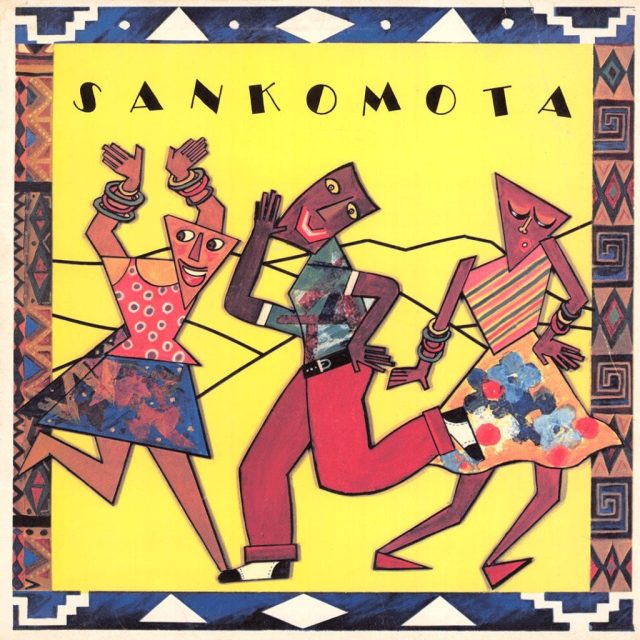

Frank Leepa’s recorded legacy is substantial:
- Sankomota(1984) – the self-titled debut album
- Dreams Do Come True(1987)
- The Writing’s On the Wall(1989)
- Exploration a NewPhase (1991)
- After the Storm(1993)
- Frankly Speaking(2001) – his final album