Sylvia
The Three Ranges Trail and Lesotho’s Ascent in Global Adventure Tourism
The Three Ranges Trail and Lesotho’s Ascent in Global Adventure Tourism
Writes Thato Chobokoane
From the Highest Lowest Point to the Roof of Southern Africa. One Trail is Redefining What It Means to Explore.
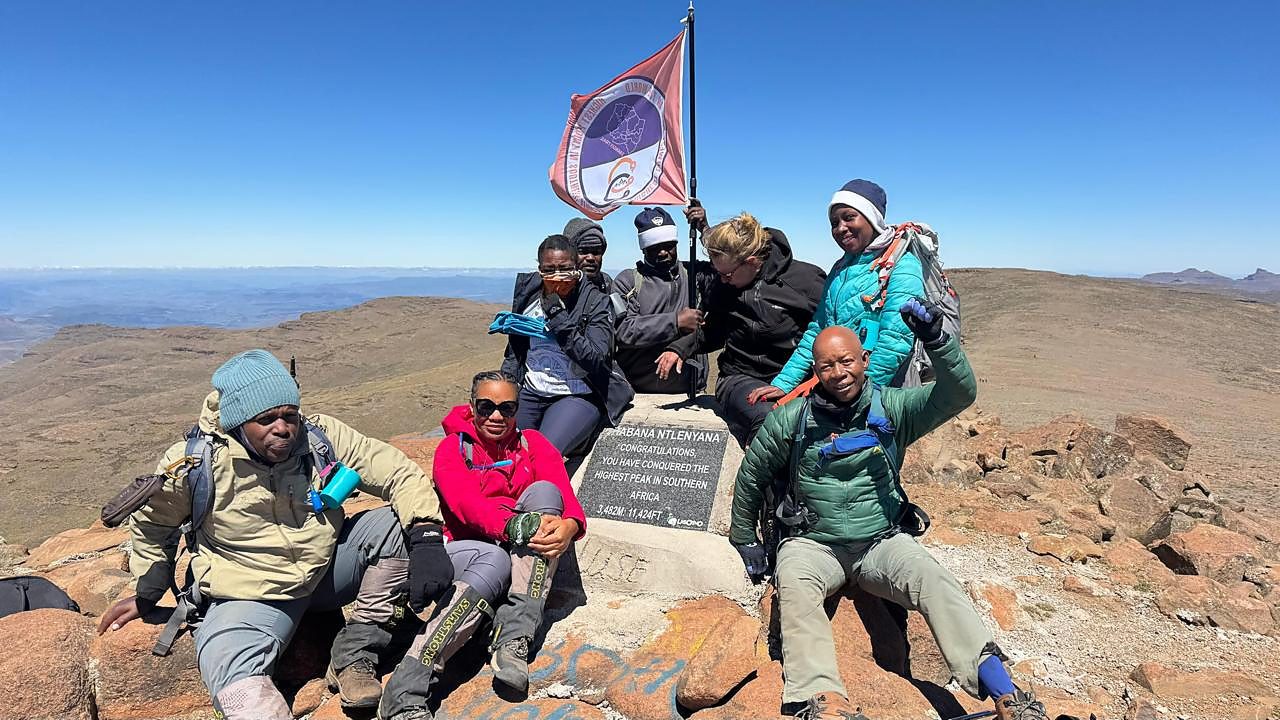
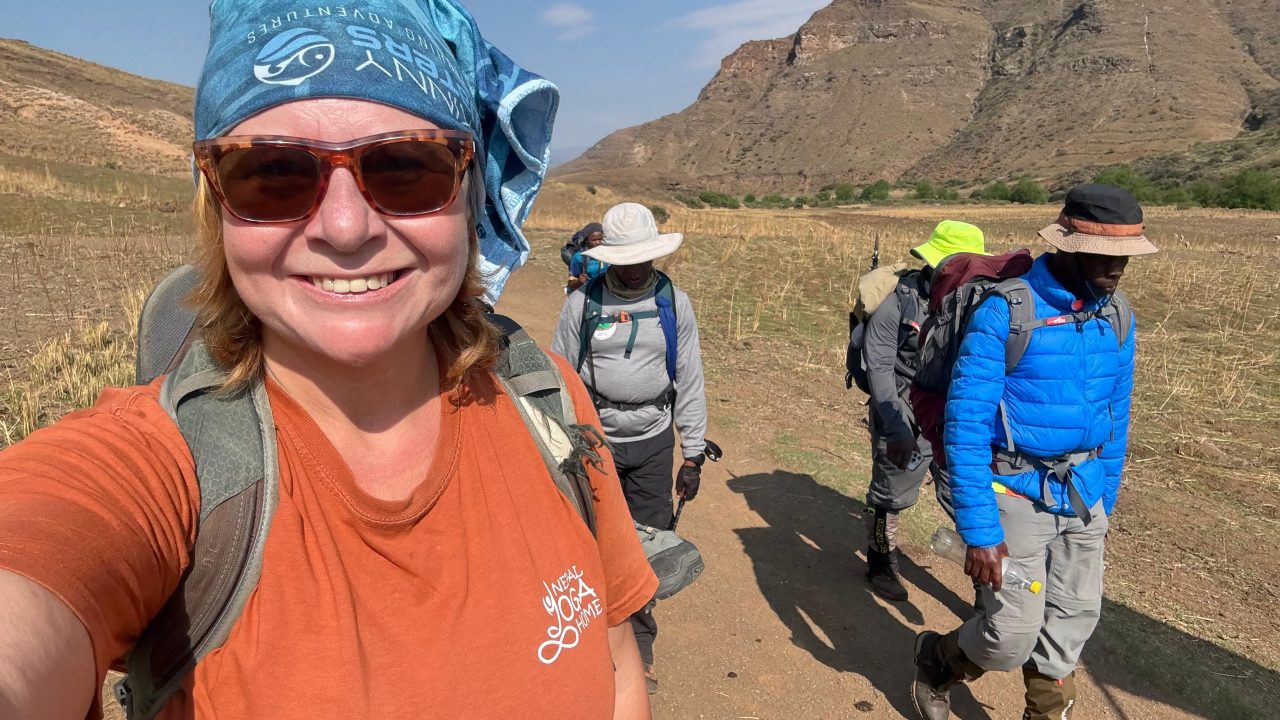
On a crisp dawn in Lesotho’s highlands, before the first light washes the valleys in gold, a hiker pauses on a crag that seems to reject gravity. Below, a ribbon of mist drifts like silk between hills. Somewhere ahead waits the final climb to Thabana-Ntlenyana, Southern Africa’s highest summit. Behind stretches what few have walked in its entirety – 288 kilometres of ridge, valley, riverbed, and sky.
This is not just a trail. This is a pilgrimage. A journey of grit and awe, of humility and exhilaration. It is called The Three Ranges Trail, and it is emerging as one of the world’s most remarkable adventure tourism offerings. It is a pride of Lesotho that has the power to shift how the world sees this Mountain Kingdom.
The Spark of an Idea
Adventure tourism is not born on whiteboards and boardrooms. It is born in the heart, in the stubborn breath between two steep climbs, in the question that refuses to leave you.
For members of Thapoha Hiking Club, a close-knit community of Lesotho’s most devoted trailblazers – that question began around 2021. What if they could forge a long-distance trek that threaded together Lesotho’s three great highland ranges? Thaba-Putsoa Range, Central Range – known in Sesotho as Takalatsa, and move right on to end in the trail to Maluti Drakensberg Range?
What if a route to the walk to Thabana-Ntlenyana could start at Morifi? These places are geographic curiosities known as the world’s highest lowest point, and end at the highest point on the continent’s southern fringe.
Lesotho’s lowest point is the highest in the whole world, standing on the shoulders of Africa at 1389m above sea level. This trek goes to 3482m above sea level in Thabana-Ntlenyana, with an altitude gain of 2093m. The ultimate meaning of Experience Elevation.
Our lowest point is at the confluence of Makhaleng and Senqu Rivers, two of the largest rivers in Lesotho. At the lowest point is also where Senqu turns its back on Lesotho; waters traversing further to meet the Atlantic Ocean down in Namibia. At the beginning is where the magnificence of Lesotho’s nature opens the door to go further to see parts of Lesotho many have never seen.
The idea was ambitious, not because it was easy, but because it demanded excellence on a scale rarely attempted here. The club did not have a corporate mandate or large budget. What they had instead was intimate familiarity with high ground, a respect for culture, and a conviction that this land could speak to the world.
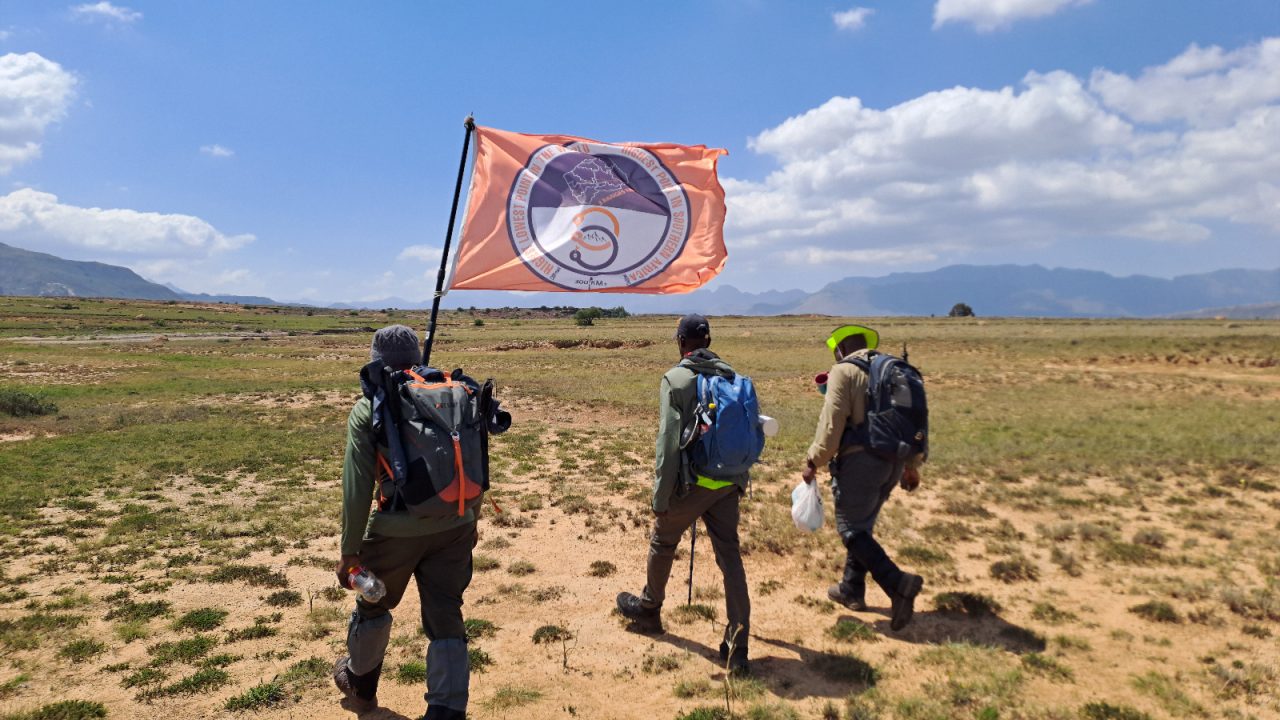
By December 2022, volunteers began physically mapping what they now call the Three Ranges Trail. They did this in three distinct sections so that hikers could choose their own level of challenge or commit to the full 14-day odyssey.
Mapping a Dream
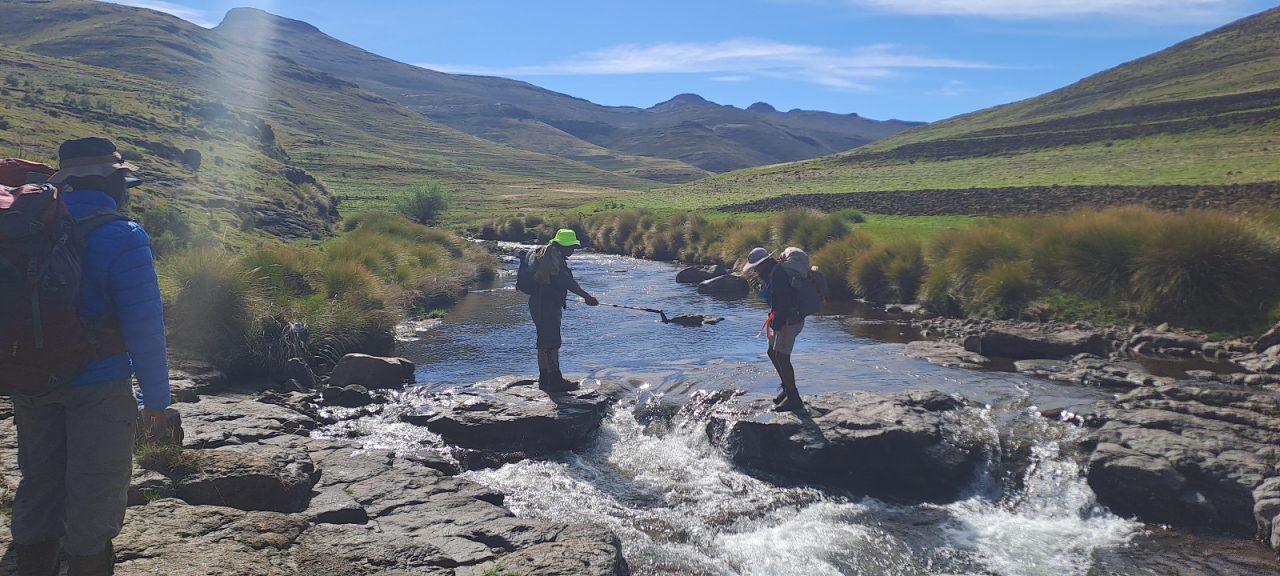
Mapping was more than plotting points on a map. It was a negotiation with terrain that refuses to be contained, steep ridges that hide scree beneath grass, rivers that swell without notice, boggy plateaus that undermine every step.
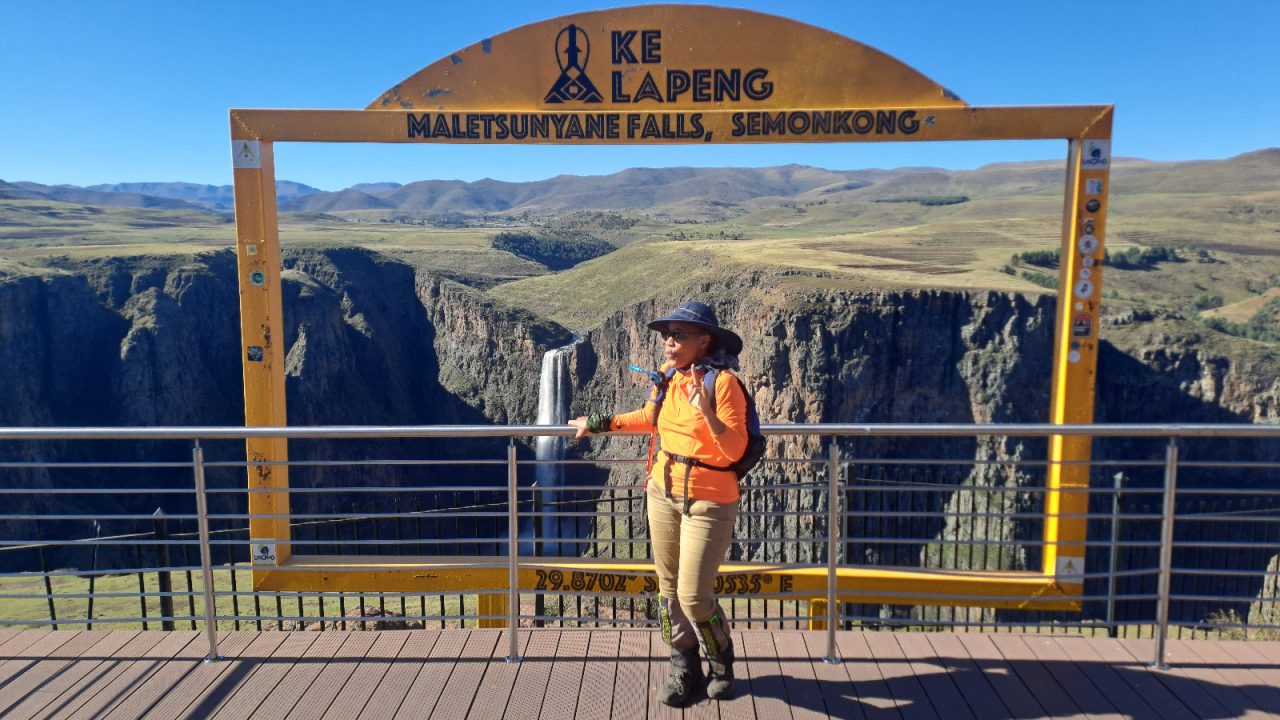
Summer in Lesotho is beautiful, but it is also rainy. On one stretch toward Semonkong, the team camped under monsoon-like skies. The next morning, they awoke to dense fog so thick it erased the landscape. They could not go forward until mid-morning, when the clouds finally lifted, revealing the path.
The physical mapping was divided into three legs:
- From Mohale’s Hoek to Semonkong
- From Semonkong to Mashai
- From Mashai to Thabana-Ntlenyana
This sectional approach set a precedent: The first of its kind in Lesotho, allowing hikers flexibility while building a coherent, continuous adventure product. Having completed the trail three times, the organisers now confirm that the conquering of the Thabana-Ntlenyana mountain after days of hiking is about physical and mental endurance. The ascent represents an achievement that is unlike any other. A journey that is truly fulfilling and has a sense of accomplishment.
So they trekked, mapped and now invite the rest of the world to discover this sense of accomplishment, endurance and strength; as they have been doing with members of other hiking clubs, from in and outside of Lesotho.
But the challenges were not only geographic.
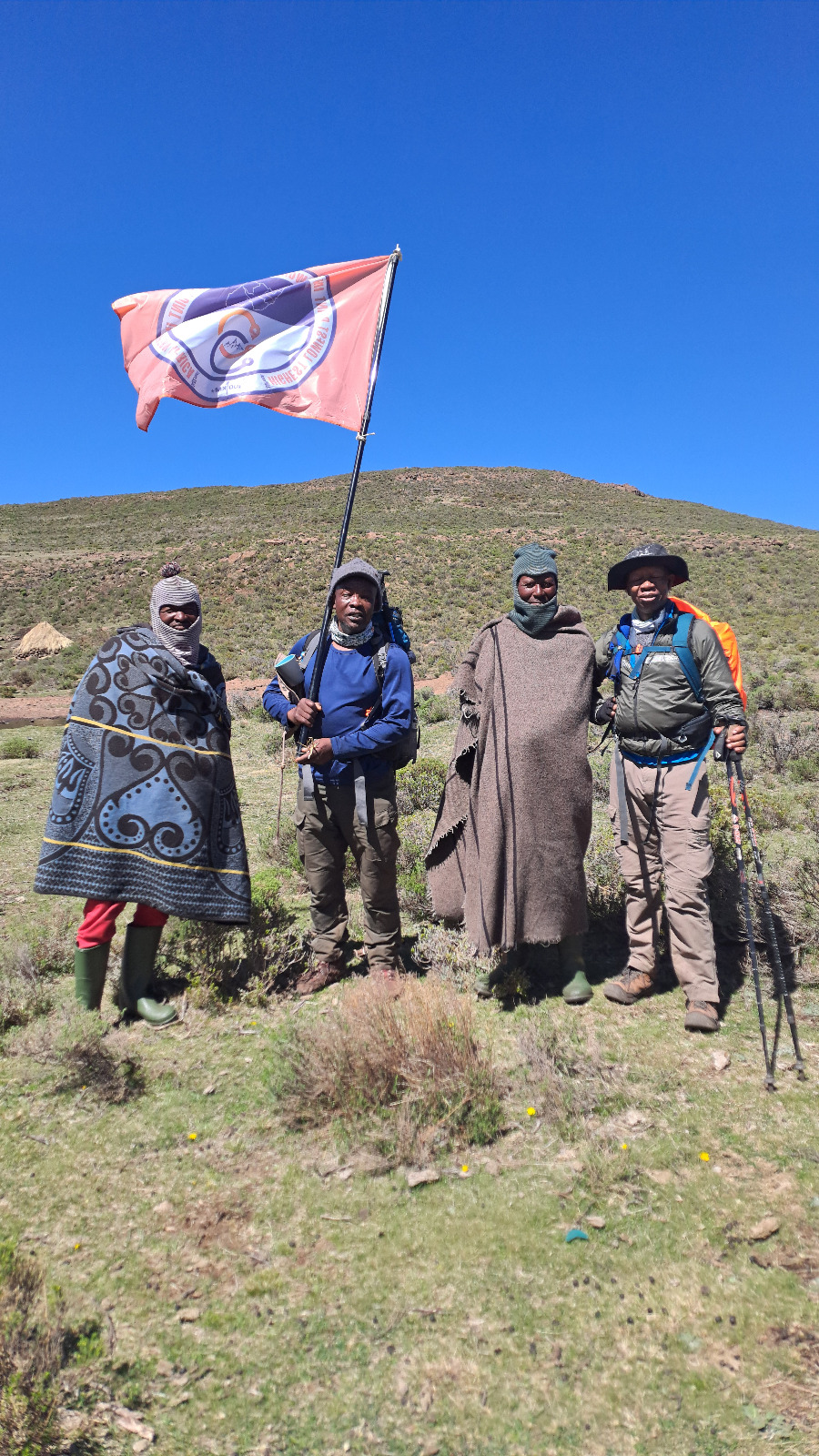
Many rural communities had never seen hikers on such a scale. Herd boys, unfamiliar with trekkers, initially viewed them warily, sometimes with suspicion that only eased through patient cultural respect and dialogue. Visiting village chiefs was not a formality; it was a protocol of respect that shaped the trail from the ground up. This gave them a clear introduction to the communities, letting them know who they are, what the seemingly impossible mission is, and easing their journey along the way.
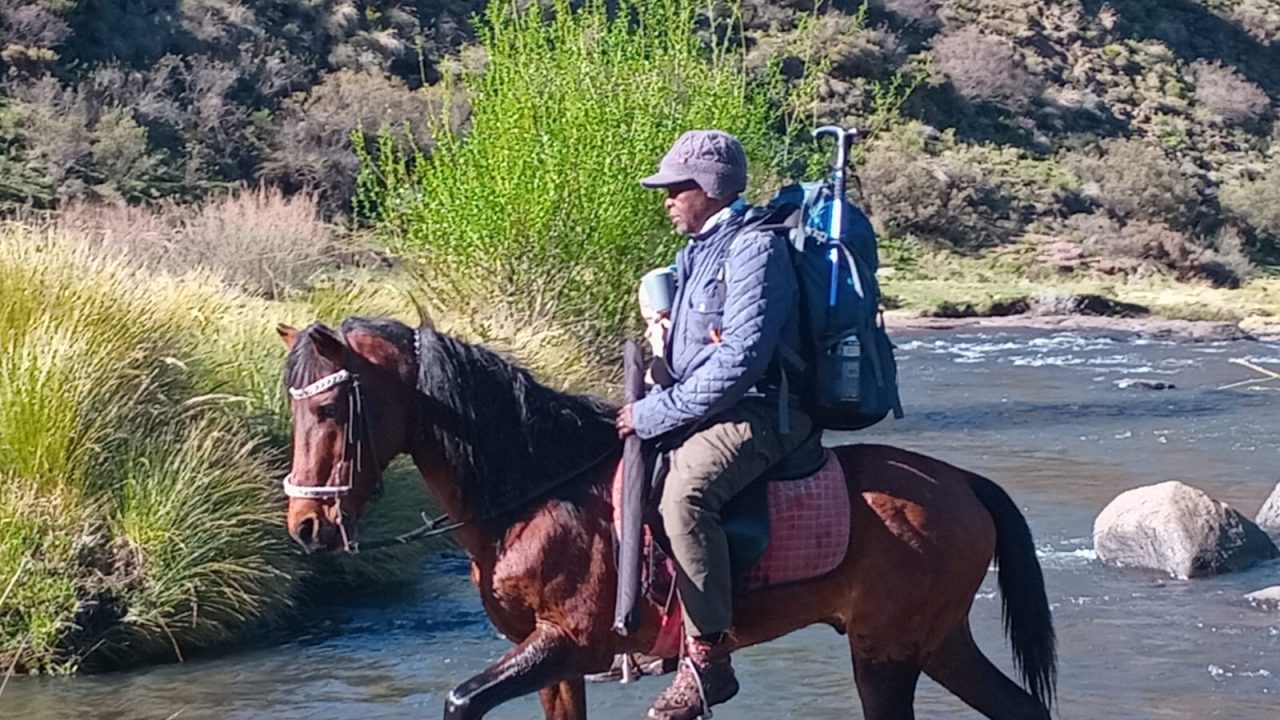
They received food from the local communities, hired mattresses, found accommodation in homes, churches and schools, and were sometimes given hot water to bathe. Horses were organized for carrying bags and herdboys were instrumental in the first part of the mapping as they know the terrain like the back of their hands.
At times, motivation among club members faltered. Some doubted whether a 14-day continuous hike could be achieved. Others balked at the preparation required. To mitigate risk, the team organized simulation hikes. These are practice ascents that taught hikers to manage weight, distribute load properly, and move confidently through uneven terrain.
By the summer of 2023, the first full traverse was completed. When the group crested near Fika-le-Motho, on that second day, something inside the organisers shifted.
“It was the culminating moment of realisation,” said organiser Ms. Lisebo Mositsi. “that this is really happening.” This moment, more than every mapped kilometer, marked the trail as a reality and not just a dream born from ambitious hikers with their heads in the clouds.
A Hiker’s Story
For many, the true measure of a trail is not its map, but its effect on the person who walks it.
Seasoned hiker Mr. Moses Mokoallo, who completed the trek twice, describes it not just as a path, but as a transformation.
“I remember being in Mohale’s Hoek, thinking to myself: What am I actually doing? I even doubted myself,” he says. “But when I finally saw Thabana-Ntlenyana in full view after more than 300 kilometres, that achievement was unlike anything else.”
He describes long days of walking in pristine terrain, of hills that rise without warning, of lush grasslands that stretch to the sky. He speaks of the long silences, the slow rhythms of footfall and breath, and the way time seems both compressed and expanded on the trail.
This is a trail that forces introspection and physical engagement. Hikers learn quickly that endurance is not only a matter of muscle, it is resilience of spirit.
Hospitality in Motion: The People Along the Path
Adventure, especially adventure built on authenticity is not just about scenery. It is about human connection. For international participant Ms. Anita Museno, what she will never forget was not only the terrain but the people. “What stood out was the hospitality,” she said. “As we passed through villages, we were offered water and sometimes motoho. I was continually blown away by people’s generosity.”
On the first evening, she recalls, the local chief insisted that the group sleep in his home rather than set up tents in darkness and cold. A gesture that, to her, was a blessing. For Anita, the social experience was as remarkable as the physical one. “The interactions weren’t staged or transactional,” she said. “They were real. That kind of authenticity is part of what makes this trail extraordinary.”
Accommodation ranged from mud huts and village homes to schools. There was little luxury by commercial tourism standards; no private showers, no electricity, no plush beds, but there was warmth, and connection. “It wasn’t a lack of comfort,” she clarifies, “it was an immersion into hospitality that is human first.”
A Regional Gem: Differentiating Lesotho on the World Stage
Adventure tourism succeeds not by replicating what exists elsewhere, but by showcasing what is uniquely compelling. Compare the Three Ranges Trail to the Inca Trail of Peru, the Appalachian Trail of the United States, or the famed trekking routes of the Himalayas: it is none of those. It is its own lineage: raw, uncommercialised, steeped in cultural encounter, and in community.
Here, you do not just pass through mountain terrain. You walk towards it. You cross it. You become part of it. Here, villages are not stops on a tourist itinerary. They are homes. They are kitchens. They are hosts. Here, the trail doesn’t just showcase geology, but also reveals the generosity of the people and of the vastness of the environment in its cheekiness.
Sustainability and Local Economics
The Three Ranges Trail was never designed as a passive economic engine. Its architecture was intentionally pro-community from inception.
From the moment hikers gather at the starting point, local economies are engaged:
- Food supplies are purchased directly from village cooperatives.
- Wood and fire-fuel come from local sellers.
- Chiefs coordinate livestock and horses for gear transport.
- Shepherds earn income by assisting with luggage logistics.
- In Liqonong, communities provided mattresses and hot water for bathing.
An even bigger initiative was born in Lesobeng in 2025; the 15-year Crystal anniversary of Thapoha Hiking Club, which was established in 2010. The name Lesobeng is named after incredible rock formations that contribute magnificence to the area; Ha Majalle being the central celebration venue.
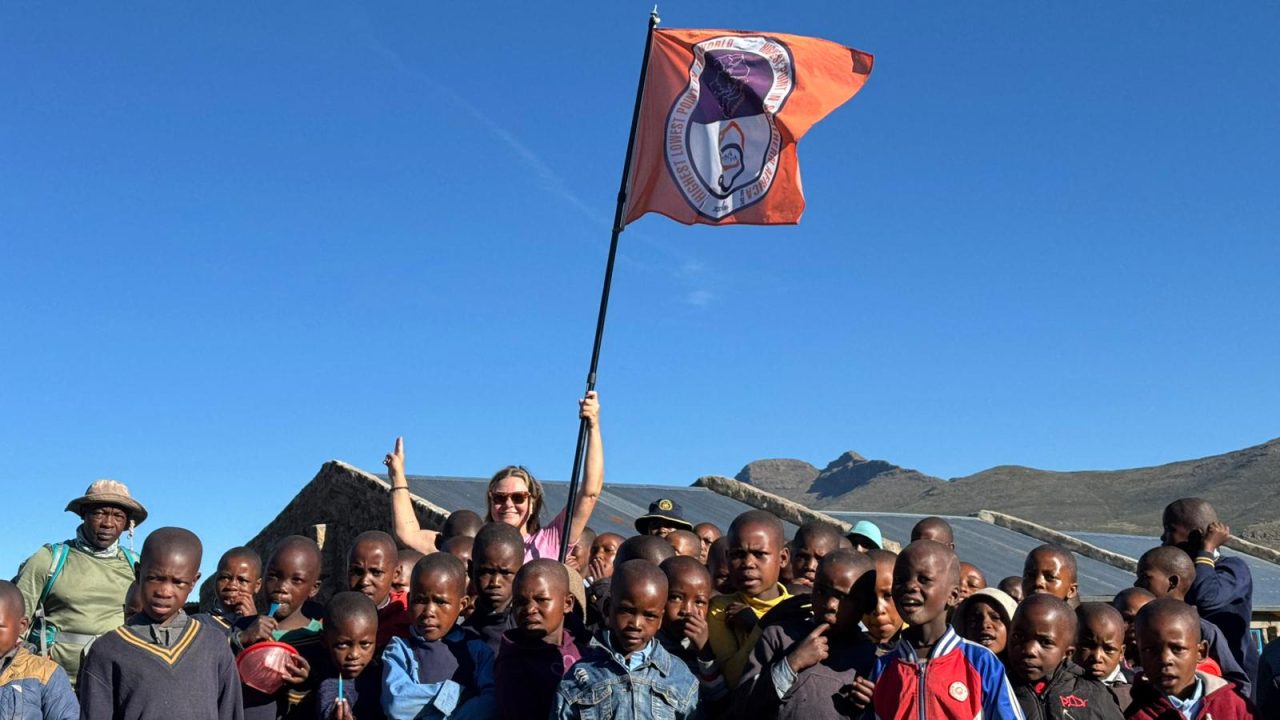
There was a shared celebration in collaboration with the Lesobeng Youth Development Association, local schools and the community at large – food, music, and communal festivity made a part of the journey itself. Each year, organisers plan to move this Community Engagement Day to a different leg of the trail, spreading economic benefit across regions.
It is actually this celebration that is going to turn into an annual event, that saw the days of the hike move to 14 days. In the first two years, the hike was only 13 days long, but the intentional need to share a day with the community saw the permanent shift happen in 2025.
The trail also intentionally connects to local points of interest:
- Dinosaur footprints at Maphutseng
- Boritsa Waterfall near Fika-le-Motho
- The dramatic Qhoasing Falls near Ribaneng
- The daring Matekane airstrip, which is ranked among the world’s most thrilling airfields
These additions are not tourism detours but they are regional anchors that create additional economic relevance and attract niche interests.
A Trail That Fits National Vision
The Ministry of Tourism, Sports, Arts, and Culture views the Three Ranges Trail as a strategic fit with emerging national priorities. Director of Tourism Ms. Lieketseng Selinyane affirms that the trail dovetails with the evolving National Tourism Strategy, which positions Lesotho as a destination defined by ecotourism, culture, adventure, and scenery.
“In this strategy, hiking becomes a premium experience, not a fringe activity, because we are already branded as the country that offers and invites the world to Experience Elevation, as Lesotho Nation Brand seeks to position the country” she explains. “This product should be marketed not only to regular hikers, but to adventurers who seek authenticity and challenge.”
Government’s role, she says, is to create an environment conducive to private sector leadership, enabling small businesses to start and to thrive, improving communication infrastructure, and encouraging accommodations along the route. “The trail is not only about the path,” she says. “It is about the opportunities that lie beside it, for investors, local entrepreneurs, and international tour partnerships.”
Adventures like the Three Ranges Trail offer many investment opportunities on the horizon and that is one of the reasons the world should take notice. For the adventurous traveller, the legend of the trail itself is reason enough to come. For investors, however, the opportunity extends far beyond individual tickets sold. There are numerous strategic opportunities:
Direct Adventure Infrastructure
- Eco-lodges and mountain huts staged along the route
- Permanent rescue and first-aid hubs
- A central gear and logistics hub in Maseru
Ancillary Economic Engines
- Organic produce supply chains
- Porter and pack-horse partnerships
- Digital reservation and mapping platforms
Strategic Global Partnerships
- International tour operators packaging bespoke expedition experiences
- Co-branded gear and equipment sponsorships
- Summit festivals and celebration events that attract media attention
The trail already represents something rare: an adventure product that doesn’t need beautification but needs elevated exposure. As Mokoallo says, “Sponsorship would elevate the final summit experience. We do not celebrate enough when something as remarkable as finishing a 14 day hike is achieved.” This is more than an Invitation to walk, but to become part of a developing and promising narrative aligned with global and tourism national goals.
Become Part of a Narrative
When you walk the Three Ranges Trail, what you carry becomes part of more than your own journey. You carry stories of kindness, of challenge, of land that meets you where you are beckoning you to rise to meet what challenges you – physically, mentally and emotionally – a true test of endurance.
For the adventurous traveller, this is an invitation to see Lesotho in ways most have never seen. For the investor, this is an invitation to build; to be part of something legacy-shaping, economy-enriching, and globally resonant.
For the world, this is a reminder that great adventure doesn’t always rise in well-written guides. Sometimes it rises in a mountain kingdom, put together by people who asked one persistent question: What if we could show the world what our mountains mean? Now they have.