Sylvia
The Evolution of Lesotho’s Secondary Examination Systems and its alignment with development priorities

The Evolution of Lesotho’s Secondary Examination Systems and its alignment with development priorities
Writes Selloane Nyakane
The Lesotho education curriculum has been under a number of reforms for over a decade, aiming to make secondary school qualifications more relevant to both local needs and to meet global standards.
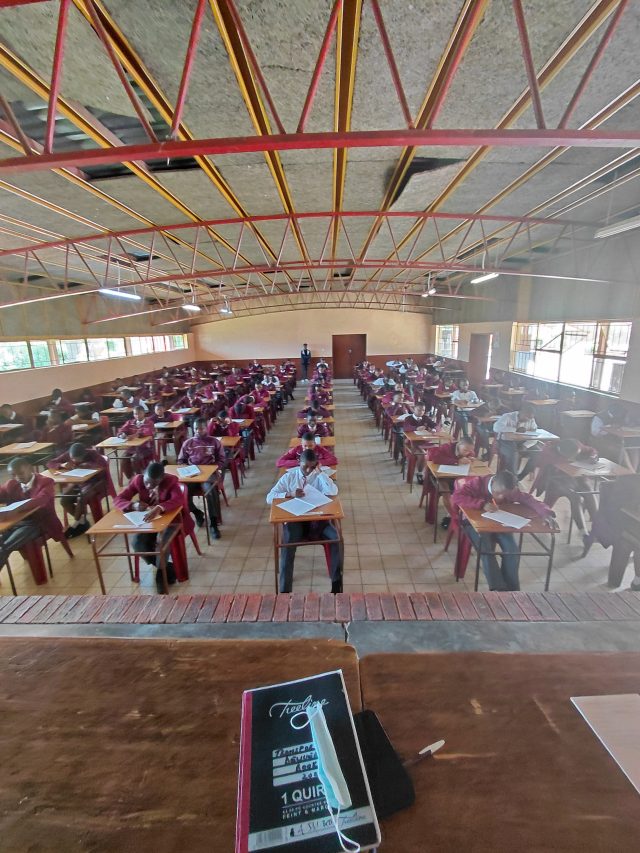
The first wave of reforms were introduced in 2013 when the Cambridge Overseas School Certificate (COSC) was phased out in favour of the Lesotho General Certificate of Secondary Education (LGCSE). Another ten years later, the Lesotho Advanced Secondary Certificate (LASC) was introduced as a pilot project. The first cohort of students following the LASC qualification sat for examinations in 2025.
During this transition, a few schools have also begun to pilot the Cambridge “Advanced Subsidiary” (AS) qualification. The AS qualification is offered at Lesotho High School, Lesotho-China Fellowship Collegiate (LCFC) and Soofia International School.
The evolution of secondary education assessment is guided by the Lesotho Basic Education Curriculum Policy (LBECP) of 2021, which outlines the education structure from Early Childhood Care and Development (ECCD) to upper secondary level. The policy promotes a learner-centred curriculum that focuses on knowledge, skills, values and attitudes required for personal development, societal participation and future employment of Basotho children
Consistent with other colonies in Africa that adopted the British education system and examinations since 1932, the Cambridge Overseas School Certificate (COSC) was introduced in Lesotho in 1961 by the then Ministry of Education and Training. For over five decades, the COSC qualification was a standard exit qualification for secondary level, and it defined the academic journey of secondary school learners in Lesotho. It shaped classrooms, influenced teaching methods and served as the ultimate gateway to tertiary education and employment. To generations of Basotho, COSC was not merely an examination, it was a national rite of passage.
For many years, success in COSC symbolised excellence, discipline and intellectual achievement. Subjects such as mathematics, science, English and humanities followed content frameworks developed outside the country, often with limited adaptation to local realities. While academically sound, the main challenge of the Cambridge based assessment has been that it was insufficiently responsive to national development priorities. It also did not adequately equip learners with practical, technical or entrepreneurial skills required in a modern, diversified economy.
The COSC assessment model also put a lot of weight on the performance of English Language as a benchmark of academic excellence. The examination was also fraught with persistent poor pass rates, high costs and administrative dependence on external systems.
Despite its shortcomings, COSC’s contribution to Lesotho’s education should not be understated. It established a culture of academic seriousness, exposed learners to internationally benchmarked standards and produced generations of professionals who continue to serve the country and the world.
COSC was eventually phased out and replaced by the current Lesotho General Certificate of Secondary Education (LGCSE) in 2014. The new examination is developed and managed locally through the Examinations Council of Lesotho in collaboration with Cambridge structures during the transition period. LGCSE marks a significant turning point in the country’s education system. It embodies the attributes of local relevance sovereignty and national development. The curriculum that is assessed through LGCSE promotes broader skills development, including problem-solving and the application of knowledge. It is an affirmation towards the Lesotho education system that not only serves academic progression, but also national development, social cohesion and employability.
Exactly ten years after the introduction of LGCSE, the Ministry of Education and Training (MoET) introduced another qualification, the Lesotho Advanced Secondary Certificate (LASC) in 2024. This examination is an advanced qualification above the LGCSE. The addition of this new examination is specifically intended to enhance the admissibility of Lesotho’s students into international universities.
According to the Examination Council of Lesotho (ECoL), LASC is a qualification positioned above LGCSE designed to better prepare learners for tertiary education and to optimise the time spent in higher education institutions. It bridges the gap between the classroom and the world of work, fostering lifelong learning skills that empower students to remain competitive in a global economy.
The introduction of LASC does not end or replace the LGCSE, but instead builds on it. LGCSE remains an important qualification at grade 11, granting learners a foundational certificate to exit into diploma and certificates programmes, while LASC is a post-LGCSE qualification offered to learners who have completed the LGCSE and wish to pursue advanced academic paths. The structure of LASC reflects continuity from basic secondary completion to advanced secondary capability.
LASC is fully grounded by a set of national education policies and reforms to align Lesotho’s education system with the 21st century skills, global competitiveness and socio-economic development goals. It encourages critical thinking, promotes equity and competence-based assessment geared to modern labour markets.
At its inception, only 26 learners sat for the maiden LASC final examinations in 2025. The pilot was initially implemented in the ten districts of Lesotho, but only five schools in the four districts of Maseru, Qacha’s Nek, Thaba-Tseka and Mokhotlong enrolled. Pilot schools were selected on the criteria of district representation, proprietorship, and location in both urban and rural areas. Several schools withdrew from the program, citing limited physical infrastructure, particularly laboratories, a shortage of equipment, chemicals, learning resources, and adequate teacher support. The low enrolment remains a challenge despite spirited efforts by the National Curriculum Development Centre (NCDC) to promote and refine the program. There is ongoing research which will inform decisions on the future rollout of the program as the policy suggests pilot programs before full implementation.
The low turnout is also an indication that more consultations with stakeholders are still required in the future to persuade schools and students to recognise the value of the LASC. The main benefit is that LASC qualified students gain a significant advantage, receiving priority for a smooth and successful transition into higher education. Consultations to further entrench the LASC will continue to be undertaken by NCDC, who are the custodian of the curriculum.
LASC is in the process of being registered under the Lesotho Qualification Framework (LQF) and is also guided by the Lesotho Basic Education Curriculum Policy (LBECP) of 2021, which outlines the education structure from Early Childhood Care and Development to upper secondary level and provides for public examinations at the end of Grade 11.
Despite the challenges, the inaugural year’s results under the LASC were generally satisfactory. However, there were traces of underperformance in Mathematics and Science, indicating that the trend is consistent with performance patterns seen at the Grade 7 and LGCSE levels. The underperformance also calls for investigations to uncover the root cause so that appropriate interventions can be put in place.
.
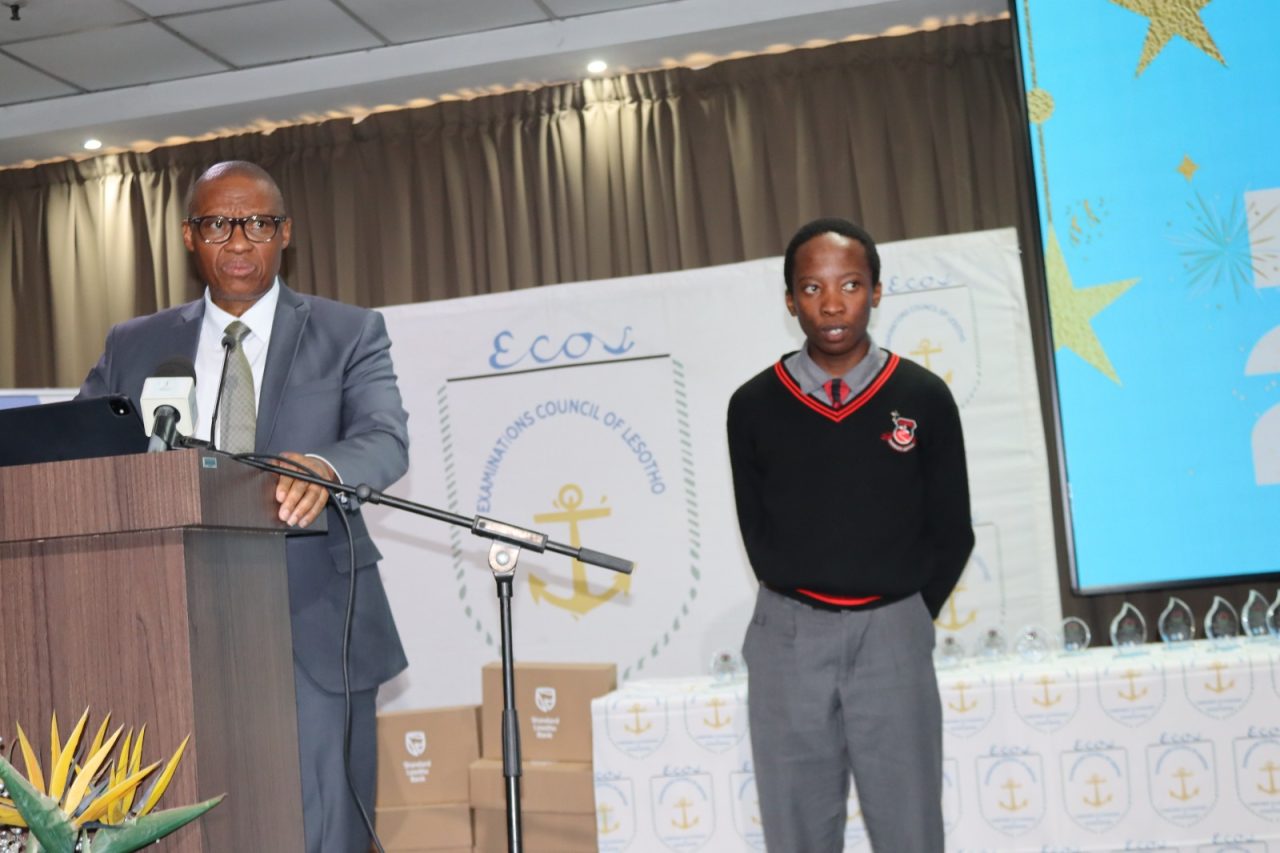
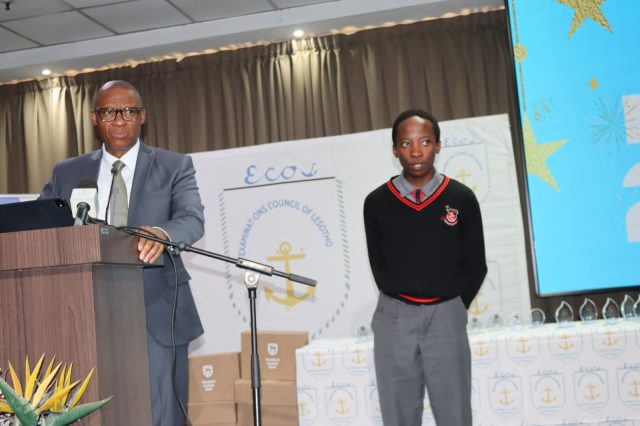
The Minister of Education and Training, Professor Ntoi Rapapa, officially presented the first -ever LASC results together with LGSCE for the class of 2025. He highlighted overall performance outcomes where 58.9% of the candidates achieved symbols A-C with symbol A at 1.6%, B at 3.1% and C at 20.2%. The remaining 41.1% fell into other symbol categories. Professor Rapapa reflected on subject performance with Sesotho emerging as the top performing subject at 77.8%, followed by English at 42.3% and biology at 36.8% while mathematics is at 7.7%, Chemistry 8.0% and physics 12.5%.
St James High School led performance rankings with 42.5% pass rate followed by St Barnabas at 26.7% and New Millennium in 3rd place at 18.2%.
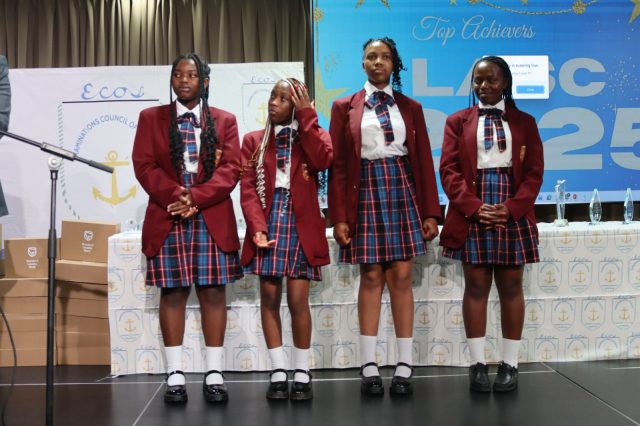
Exceptional recognition was awarded to top performing learners Tsebanang Neko, Rabetsoe Kobile, Boitumelo Mokunyane and Keketso Phosholi all from St. James High School in Mokhotlong.
Minister Rapapa noted that LASC has shown initial success in learners’ performance, but prevailing challenges such as teacher preparedness and the shortage of resources remain a major obstacle. He reaffirmed the government’s commitment to education reform while encouraging that outcomes should motivate more schools to enrol in future LASC examinations.
The Minister also underscored the government’s plans to strengthen teacher training, implement the three-tier learning model from grade 9 and continue refining curriculum delivery to ensure that Lesotho’s education system responds effectively to modern demands.
The Ministry of Education and Training is now facing a critical decision on whether to scale up LASC as the national Grade 12 qualification or keep it in its trial phase. All eyes will be on the government to see how they balance the pilot`s early successes against the existing challenges on resources, as has been identified.