Sylvia
Short history of Lesotho
SHORT HISTORY
The Kingdom of Lesotho traces its origins to the early nineteenth century during the Lifaqane wars, a time of upheaval and transformation across Southern Africa. It was during this era that King Moshoeshoe I laid the foundations of the Basotho nation. Through strategic leadership, unity, and diplomacy, he brought together diverse clans and communities, forging alliances with influential chiefs and consolidating a nation that would endure beyond the turmoil of the period.
Originally known as Basutoland, the country was placed under British protection in 1868, a decision that ensured its survival as a distinct political entity. This relationship with Britain continued until independence was achieved on 4 October 1966. Today, Lesotho remains one of only three constitutional monarchies on the African continent, alongside the Kingdom of eSwatini and the Kingdom of Morocco.
Lesotho is a landlocked and predominantly mountainous country with a population slightly exceeding 2.3 million people. Covering an area of approximately 30,355 square kilometres, the country is globally recognised for its exceptional altitude. Its lowest point lies at 1,400 metres above sea level, making it the country with the highest lowest elevation in the world. Rising above all other peaks in Southern Africa is Thabana-Ntlenyana, which reaches 3,482 metres above sea level and stands as the highest mountain in the region.
PRE-COLONIAL AND COLONIAL POLITICAL HISTORY
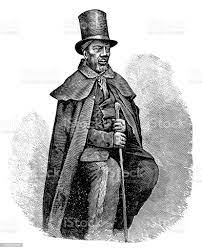
The emergence of the Basotho nation is inseparably linked to the period of upheaval known as the Lifaqane, or Mfecane wars, which swept across Southern Africa during the early nineteenth century. These conflicts, precipitated largely by the expansion of the Zulu kingdom under King Shaka, reshaped societies and forced widespread migrations. Amid this turbulence rose a leader whose vision, diplomacy, and statesmanship would lay the foundations of a nation — King Moshoeshoe I, the founding father of Lesotho.
Born Lepoqo in 1786 at Menkhoaneng, Moshoeshoe was the eldest son of Mokhachane, a subordinate chief of the Mokoteli branch of the Bakuena people. From an early age, he demonstrated exceptional leadership qualities, marked by strategic foresight, moral authority, and an unwavering commitment to unity. These attributes distinguished him among his contemporaries and set him apart as a leader of uncommon political wisdom.
In 1824, Moshoeshoe led his people from Menkhoaneng to Thaba-Bosiu, a flat-topped mountain that would become both a physical stronghold and a powerful symbol of Basotho resilience. The natural fortifications of Thaba-Bosiu enabled Moshoeshoe to protect his people from repeated attacks during the Lifaqane wars, ensuring their survival at a time when many communities were being displaced or destroyed.
At Thaba-Bosiu, Moshoeshoe embarked on the deliberate and inclusive task of nation-building. He welcomed splinter groups and displaced communities seeking refuge, integrating them into a single political and social entity. Prominent among these groups were the Baphuthi under Moorosi, the Makhoakhoa led by Matela, the Batlokoa under Sekonyela, and the Bataung of Moletsane. Together with other Nguni-speaking peoples, these groups formed the Basotho nation as it is recognised today — a nation forged not by conquest alone, but by diplomacy, protection, and unity.
Moshoeshoe’s leadership was characterised by a rare commitment to peaceful coexistence. Renowned for his diplomatic skill, he sought dialogue over conflict wherever possible, earning him recognition as one of the most astute political leaders of his era. His ability to balance firmness with generosity ensured loyalty among his followers and respect from neighbouring powers.
The arrival of European settlers in Southern Africa — primarily the British and the Boers — marked a new chapter in the region’s history. As these settlers expanded into the African interior, competition for land intensified, giving rise to a series of conflicts between indigenous communities and colonial forces, including the Basotho.
In 1833, King Moshoeshoe I welcomed Christian missionaries led by Eugène Casalis. Beyond introducing Christianity, the missionaries played an influential role as advisors, educators, and intermediaries during Moshoeshoe’s reign. Their presence strengthened diplomatic engagements with European powers and contributed to the administration and international recognition of the Basotho nation.
Faced with increasing pressure from colonial expansion and territorial disputes, Moshoeshoe made the strategic decision to seek British protection. On 15 April 1868, at his request, Basutoland was proclaimed a British protectorate by Queen Victoria of Great Britain. This move preserved the territorial integrity of the nation at a critical moment in its history, ensuring its survival as a distinct political entity.
King Moshoeshoe I passed away on 11 March 1870, leaving behind a legacy unmatched in the region’s history. He was succeeded by his eldest son, Paramount Chief Letsie I. Moshoeshoe’s legacy endures as that of a warrior-statesman — a unifier, diplomat, and visionary whose leadership laid the enduring foundations of the Kingdom of Lesotho.
Following the Gun War of 1880 between Basotho chiefs and the Cape Colonial Government, which arose from resistance to disarmament policies imposed by the Cape Colony, Basutoland’s administration changed significantly. Thereafter, the territory was governed directly from London through a Resident Commissioner stationed in Maseru, marking a new phase in colonial oversight.
COLONIAL ERA AND POLITICAL AWAKENING
From the 1860s onward, Basutoland emerged as one of the most productive agricultural regions in Southern Africa. Its fertile lands supplied food to the rapidly growing mining centres of Kimberley and Johannesburg. During the reign of Chief Seeiso Griffith, the territory experienced notable prosperity, to the extent that Basutoland was able to donate twenty-four Spitfire fighter aircraft to Britain during the Second World War — a remarkable gesture reflecting both loyalty and economic strength.
Basutoland also became a significant source of migrant labour for South Africa’s mining industry, a pattern that continues to influence the country’s economic structure to this day. Despite these contributions, colonial policies were largely restrictive and did not promote sustainable economic development for the Basotho people.
Growing dissatisfaction with colonial governance gave rise to early political mobilisation. As early as 1907, Basotho leaders began advocating for legislative reforms through organisations such as the Basutoland Progressive Association. Over time, political consciousness deepened, setting the stage for organised resistance and demands for self-governance.
These efforts culminated in the proclamation of independence on 4 October 1966, marking the birth of the modern Kingdom of Lesotho as a sovereign state.