Sylvia
Lesotho’s Modern Political History
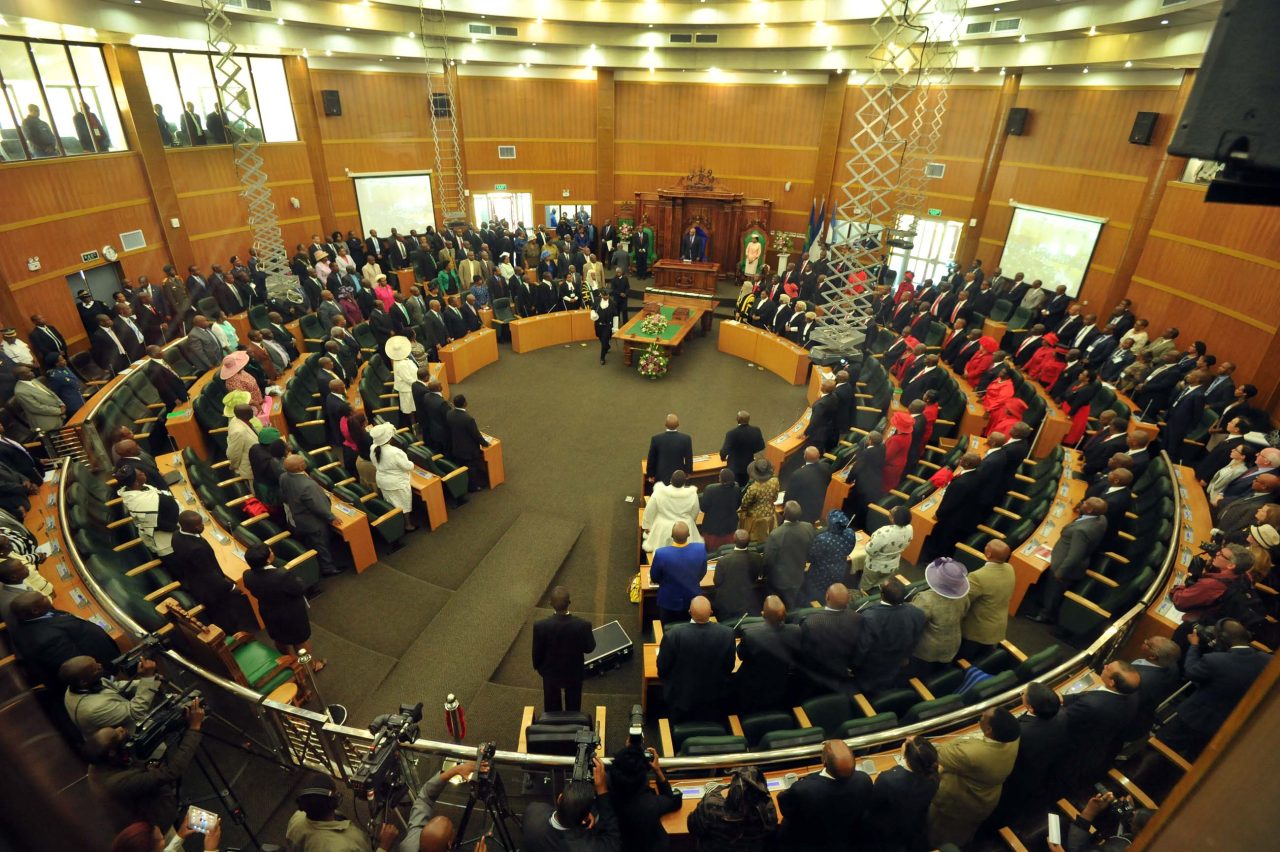

At independence in 1966, Chief Sekhonyana ’Maseribane briefly served as Lesotho’s first Prime Minister before handing over leadership to Chief Leabua Jonathan, who governed from 1965 until 1970. Following electoral defeat in 1970, Jonathan declared a state of emergency, suspended the constitution, and ruled until 1986.
In that year, a military coup led by Major General Metsing Lekhanya ushered in a new era of military governance. His administration signed the Lesotho Highlands Water Project Treaty with South Africa, enabling the construction of Katse and Mohale dams. Political activity was banned under Order No. 4, and tensions between the military government and the monarchy culminated in the exile of King Moshoeshoe II.
Major General Lekhanya was removed in a bloodless coup in 1991 by Colonel Elias Phisoane Ramaema, whose government restored political freedoms and facilitated Lesotho’s return to democratic rule. Elections held in 1993 resulted in victory for the Basutoland Congress Party under Prime Minister Ntsu Mokhehle.
Subsequent political realignments led to the formation of the Lesotho Congress for Democracy and later ushered in an era of coalition politics following the introduction of the Mixed Member Proportional electoral system. Since 2012, coalition governments have defined Lesotho’s political landscape, bringing both inclusivity and instability, with frequent elections and shifting alliances shaping governance into the present era.
HEADS OF GOVERNMENT SINCE INDEPENDENCE
Sekhonyana ‘Maseribane 1965
Chief Leabua Jonathan 1966-1986
Major General Metsing Lekhanya 1986-1991
Major General Phisoana Ramaema 1991-1993
Ntsu Mokhehle 1993-1998
Pakalitha Mosisili 1998-2012
Motsoahae Thomas Thabane 2012-2015
Pakalitha Mosisili 2015-2017
Motsoahae Thomas Thabane 2017-2020
Dr. Moeketsi Majoro 2020 – 2022
Ntsokoane Samuel Matekane 2022 to date
SYSTEM OF GOVERNMENT (ARMS OF STATE)
Lesotho is a constitutional monarchy with a bicameral Parliament comprising the Senate and the National Assembly. The Senate consists of 33 members, including 22 principal and ward chiefs and 11 members nominated by the King on the advice of the Prime Minister. The National Assembly comprises 120 members, elected through a Mixed Member Proportional system.
The Judiciary operates under a dual legal system recognising Roman-Dutch law and Sesotho customary law. Executive authority is vested in the Cabinet, led by the Prime Minister, who is appointed by the King.
NATIONAL SYMBOLS
The national Flag
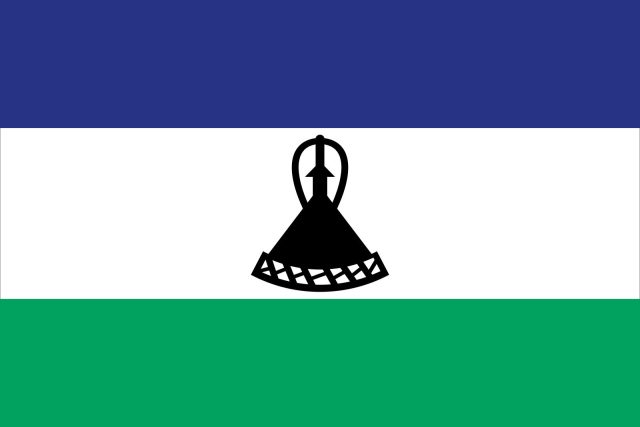
The national flag of Lesotho features blue, white, and green horizontal bands with a black Basotho hat at its centre, symbolising rain, peace, fertility, and the Basotho people.
Coat of Arms
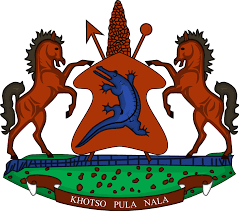
The coat of arms displays a crocodile-emblazoned shield, flanked by Basotho ponies, with crossed traditional weapons signifying protection. Beneath it appears the national motto: Khotso, Pula, Nala — Peace, Rain, Prosperity.
National Anthem
The national anthem, Lesōthō Fatše La Bo Ntat’a Rōna, reflects both European musical origins and African adaptation, with lyrics refined by the renowned composer Joshua Pulumo Mohapeloa and formally adopted in 1967.
The Anthem
Lesotho Fatše la bo-ntat’a rona
Har’a mafatše le letle ke lona
Ke moo re hlahileng
Ke moo re holileng
Rea le rata
Molimo ak’u boloke Lesotho
U felise lintoa le matšoenyeho
Oho fatše lena
La bo-ntat’a rona
Le be le khotso