2x1rm
2x1rm
King Letsie III shares his views on the Legacy of King Moshoeshoe I and the meaning of the Bicentennial Anniversary today.

Writes Manyathela Kheleli
The history of the Basotho nation recognises the exodus of the nation from Menkhoaneng to Thaba Bosiu by the great King Moshoeshoe I and his people in 1824 as the turning point in history that marks the formation and the fortification of the Basotho nation that we know today. In a story with a strong semblance of the biblical story of Moses who led the Israelites to ‘the promised land,’ Moshoeshoe led his people to Thaba Bosiu, the mountain fortress that laid the foundation of modern-day Lesotho. Today, Basotho speak with pride and celebrate the vision of King Moshoeshoe and his great legacy that earned us a sovereign state that Lesotho is today. In an interview with His Majesty King Letsie III, the reigning King of the Basotho Nation and ninth-generation heir of the royal lineage from his great grandfather, Peete of the Ba-Mokoteli dynasty, shares his views about the legacy of King Moshoeshoe I and how that legacy has stood the test of time in the last two hundred years and the future of Lesotho in a family of nations.
When King Letsie III looks back at the legacy the legacy of King Moshoeshoe I, the founder of the Basotho nation, he gets the conviction that the greatest legacy that the founding father of the Basotho Nation left the nation is the country, Lesotho, which Basotho must cherish and value. Lesotho is a country that was forged under difficult circumstances, he says, citing conditions of war and strife such as lifaqane wars. Subsequent to that, His Majesty says King Moshoeshoe also had to fight off enemies from the West, particularly the Afrikaners, who unfortunately captured a huge chunk of his territory. But through his political and diplomatic skills and the courage of his people, he managed to create and come out with a country that we now proudly call our own under such difficult circumstances.
“It is not every African nation in this part of the world that has the privilege of having a country that they can call their own like Basotho. We have our neighbours, the Ngunis, the Zulus, Amaxhosa. They all have their territories but they are now a part of the bigger Republic of South Africa. But for Basotho, because of Morena Moshoeshoe’s skills, we have this valuable legacy that we call Lesotho. For me, that is the biggest legacy that we can say King Moshoeshoe left us,” the King said in an interview with Lesotho Insights.
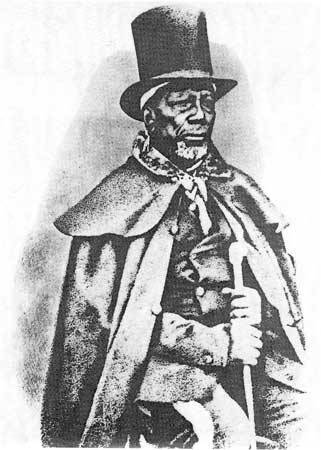
His Majesty also firmly holds the view that the Great King Moshoeshoe was a visionary leader. He believes that the epicenter of Moshoeshoe’s governance principles was the ideal of peace, where he is often quoted saying “Khotso ke khaitseli ea ka.” Loosely translated to imply that he valued peace so much that he viewed it as a sister he so dearly loved. Based on those firmly held principles, King Letsie III infers that King Moshoeshoe’s vision for the Basotho Nation was that Basotho should be a people of peace, and that Lesotho should be a peaceful country based on the principles of reconciliation, charity and forgiveness.
He also said that he believed that King Moshoeshoe I aspired to build a nation in which all his subjects were reconciled with each other, and where we all helped each other through difficult times. “This is what I would deduce from his philosophy of governance, and I believe King Moshoeshoe wished for his nation to be a prosperous country that can stand on its own,” he added.
Looking back, His Majesty recognises that the role of the King has evolved over the last two hundred years and is now in stark contrast with the role that King Moshoeshoe played in his era. “In those early days, he was the executive monarchy and had the ultimate political authority over his people and the land. But that changed when Lesotho became a British Protectorate. The King then became a Paramount Chief because there could only be one King or Queen who sat in the United Kingdom.”
During the Victorian era, the paramount chief was a formal title created by the British Empire as a substitute for ‘king’ to create a distinction in the protocol of the British Empire. At the time when Lesotho was afforded protection by Britain, the political and executive powers were taken from the traditional system and shared between the Paramount Chief and the office of the High Commissioner and Resident Commissioner. The nature and role of Lesotho’s Monarchy maintained this arrangement throughout British rule until 1966 when the country regained independence.
With the new independence constitution that was modelled on the Westminster system of governance common in most former colonies of the British Empire, the Lesotho Monarchy became a Constitutional Monarchy similar to that of England in many ways. Key changes were that the Paramount Chief assumed the title of ‘His Majesty the King’ and Head of State, which title officially embodies the country in its unity as a legitimate and sovereign state. The role of the King is largely a ceremonial figurehead. The executive and political powers were then confined within the jurisdiction of the legislative arm of the government headed by the prime minister, who is the head of government. This status quo has continued to prevail even after the 1993 review of the constitution until today.
Looking into the future, His Majesty contends that it is difficult to predict what the future holds for Basotho in the next hundred years, considering the prevailing political, social and economic challenges. He was, however, happy to share his hopes and aspirations for his nation. “My hope and wish is that Lesotho in a hundred years will still be a sovereign country. Lesotho will still be a country at peace with itself and its neighbour, and will still be a country playing its rightful role in the family of nations in the region, in the continent and globally.” His hope is that in a century, Lesotho will be a prosperous country through fully harnessing the resources at its disposal.
While Lesotho’s resources may seem too little, he argues that a lot of other countries have made it with even less. His Majesty also affirmed that one of Lesotho’s greatest resource was her people and that if the country invested in the development of its human capital, it can achieve prosperity. “I also believe that one of our most valuable natural resource is the abundant water that we see flowing daily in our rivers.” The country must therefore exploit this water in a sustainable manner to drive prosperity, citing examples such as using the water to create sources of energy and also using it to drive agriculture.
It is highly probable that in the next century, diamond deposits will have run out, but water would still be abundant and can therefore be used to catalyse economic growth and prosperity. “I think we should have unity of purpose as a nation, be a stable country and be at peace with ourselves so that we can work together and pull together in one direction. This is my hope for the future and where I believe we will be in the next hundred years,” he said.
Basotho should be proud of their identity amidst the many challenges such as poverty and unemployment. Basotho in the diaspora and at home should be proud of their heritage and continue to contribute meaningfully towards developing the country in whatever way they can. “But what is important for all Basotho is unity. Unity of purpose, to remember who we are and where we come from. To remember the founding principles that our founding father, King Moshoeshoe I bequeathed us, which are the principles of peace, reconciliation, charity and kindness to one another.”
In conclusion, the King said he strongly believed that if Basotho recaptured King Moshoeshoe’s principles wherever they are and bring them into their daily lives, the country could easily transform its fortunes and become a proud nation in a century.